
Roofing
Metal Roof Installation and Repair
Standing-seam and metal roofing for homes and buildings: honest guidance on materials and ventilation, properly detailed installation, and targeted repair that fixes the actual source instead of selling a replacement.
Updated October 13, 2026
Read This First
The short version
- Metal roofing is a system, not a material swap. The gap between a roof that lasts decades and one that leaks in year three is mostly in the detailing.
- Exposed fastener panels cost less but rely on many rubber washers that age in Texas sun. Standing seam hides the fasteners and costs noticeably more.
- Metal is not hail-proof: it usually stays watertight when hail hits, but it can be visibly dimpled.
- A metal roof with one failed pipe boot does not need a replacement, so repair starts with finding the actual source.
- Within ten miles of Round Rock, NOAA records 219 hail events from 2000 to 2026, with the largest at 4.0 inches.
Want your metal options laid out for your roof and budget? Call or text 512-575-5052 or use Get Help.
Short version: 2 min. Full page: 8 min. Want the detail? Each section below opens with a tap, or switch to Full at the top to open them all.
Installation
Metal roof installation, detailed properly
Shape, thickness, fasteners, and venting all matter, and our crew does the install to our written standard.
Metal is a system, not a material swap
Metal roof installation is a system decision, not just a material swap. Panel profile, gauge, underlayment, fastening method, and ventilation all interact, and the difference between a metal roof that lasts decades and one that leaks in year three is almost entirely in the detailing: seams, penetrations, transitions, and edge metal.
We walk you through the real options, standing seam versus exposed fastener, gauge and coating choices, and what each means for heat, wind, and hail performance and long-term value. Our crew does the installation, documented from the first material decision to the final walkthrough.
Repair
Metal roof repair that finds the actual source
Leaks travel along panels and ribs, so repair starts by finding the source, like backed out fasteners or failed washers.
Metal repair starts with diagnosis
Metal roof repair starts with diagnosis, because metal fails differently than shingles. Leaks travel along panels and ribs far from where they show inside. The usual suspects are backed-out fasteners, failed washers, aged sealant at seams and penetrations, and flashing that was detailed wrong on day one.
We find the actual source, photograph it, and fix what needs fixing. A metal roof with one failed pipe boot does not need a replacement, and we will not sell you one. The hail damage atlas shows what a cosmetic dent and a real hit look like on a metal panel.
Standing Seam Or Exposed Fastener
The choice that decides everything else
Exposed fastener costs less and suits barns and shops, while standing seam costs more and avoids washer failure.
Exposed fastener panels
Metal roofing is not one product. The two systems common in Texas behave so differently over time that comparing prices between them without understanding the difference is how homeowners end up disappointed.
Screwed through the face of the panel into the structure beneath, with a rubber washer under each screw head making the seal. This is the lower cost system and it is genuinely appropriate for barns, shops, and outbuildings.
The limitation is the washers. Every one is a small seal exposed to Texas sun, and they harden and shrink over time. A roof of this type has thousands of them, and each is a potential leak once it ages. These systems typically need a fastener maintenance pass, which is real recurring work rather than a theoretical possibility.
Standing seam. The fasteners are hidden, clipping the panel to the deck beneath the seam, and adjacent panels lock together over the top. Nothing penetrates the water surface. It costs meaningfully more and it removes the failure mode above entirely.
It also allows the panel to move. Metal expands and contracts substantially across a Texas temperature swing, and a standing seam system is designed to let it, where a face-fastened panel is fighting its own expansion at every screw for its whole life.
Which is right depends on the building, how long you intend to own it, and what is beneath the roof. We will tell you plainly when the cheaper system is the sensible answer, because on some structures it is.
What Moves The Number
Why metal quotes vary so widely
Metal quotes differ by gauge, coating, complexity, underlayment and tear off, and thin metal costs less and dents more.
Panel gauge
Two metal quotes on the same house can differ enormously and both be honest, because the variables are larger than they are with shingle.
Thinner metal costs less and dents more readily, which matters directly in a hail market. Gauge is one of the first things to check when comparing quotes, and it is frequently not stated.
Substrate and coating. Galvanized, Galvalume, and aluminum behave differently, and the paint system over them determines how the color holds under Texas ultraviolet exposure. A cheap coating chalks and fades years earlier.
Roof complexity. Metal is cut and formed to the roof. Every valley, hip, dormer, and penetration is custom detailing. A simple gable is efficient; a complex roof multiplies labor in a way shingle does not.
What is underneath. Underlayment choice matters more under metal than most homeowners expect, both for water and for the condensation that forms on the underside of a metal panel.
Tear-off and decking. What comes off, and what condition the deck is in once it is off, is not fully knowable until it is open. An estimate that ignores this is not being careful with you.
For a range specific to your roof, ask Shepherd AI. It can size the work from your address and tell you which of the above is driving your number, and it will say when a figure genuinely requires someone on site.
Texas Performance
Metal in a hail market, honestly
Metal usually stays watertight in hail but can dent, and some carriers exclude cosmetic damage on metal.
Metal resists penetration well and dents readily
Metal roofing is often sold in Texas as hail-proof. It is not, and the distinction matters before you spend the money.
Hail that would fracture a shingle mat will usually leave a metal panel watertight, which is a genuine advantage. It may also leave the panel visibly dimpled. The roof still works. It may not still look the way you paid for it.
Within ten miles of Round Rock, NOAA records 219 hail events between 2000 and 2026, 71 at sizes generally associated with roof damage, largest recorded 4.0 inches, with 2023 the busiest year and April and March the peak months. Source: NOAA NCEI Storm Events Database, 10 mile radius, 2000-01-01 to 2026-12-31. In a market with that history, cosmetic denting is a realistic outcome, not an edge case. Heavier gauge and textured profiles hide it better than thin, flat panels.
Coverage for cosmetic damage varies by policy and some carriers exclude it specifically on metal. That is a question for your insurer and your policy language, not for us. We document condition accurately and let the people whose job it is make coverage decisions.
Heat performance is real and often oversold. A reflective coated metal roof genuinely reduces heat gain compared with a dark shingle roof. It is not air conditioning, and the size of the benefit depends heavily on attic ventilation and insulation, which are usually the larger lever.
Noise is mostly a myth. Metal over solid decking with underlayment is not appreciably louder in rain than shingle. The noise people remember comes from metal over open purlins on a barn, which is a different assembly entirely.
Where We Work
Metal roofing in Round Rock and nearby towns
The Roof Shepherd is based in Round Rock and works anywhere in Texas. These are the towns closest to home.
Field Photos
On the job
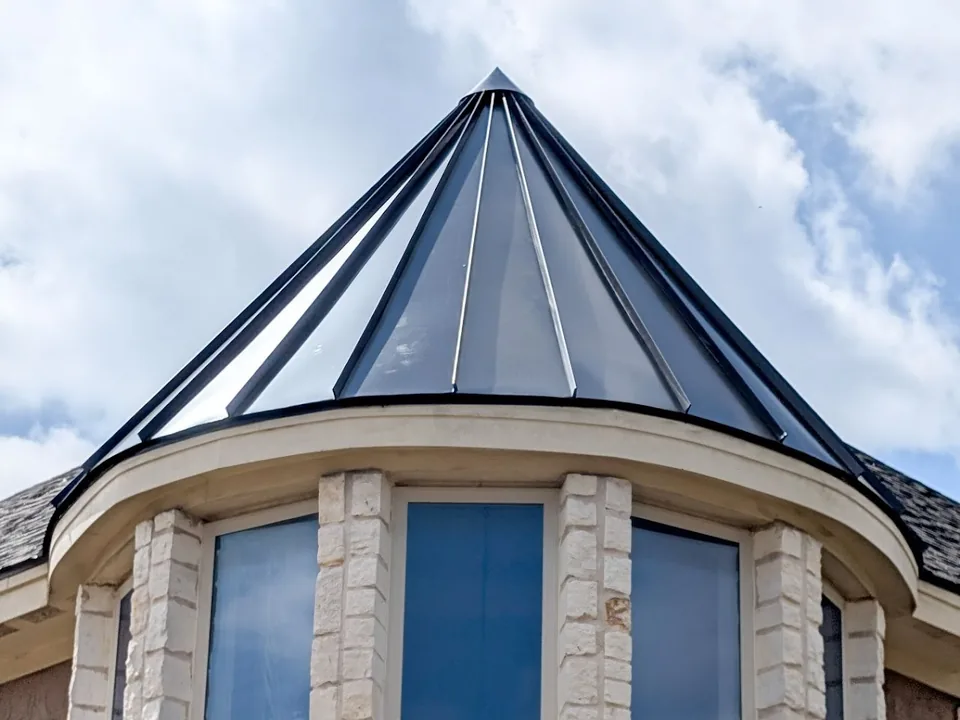
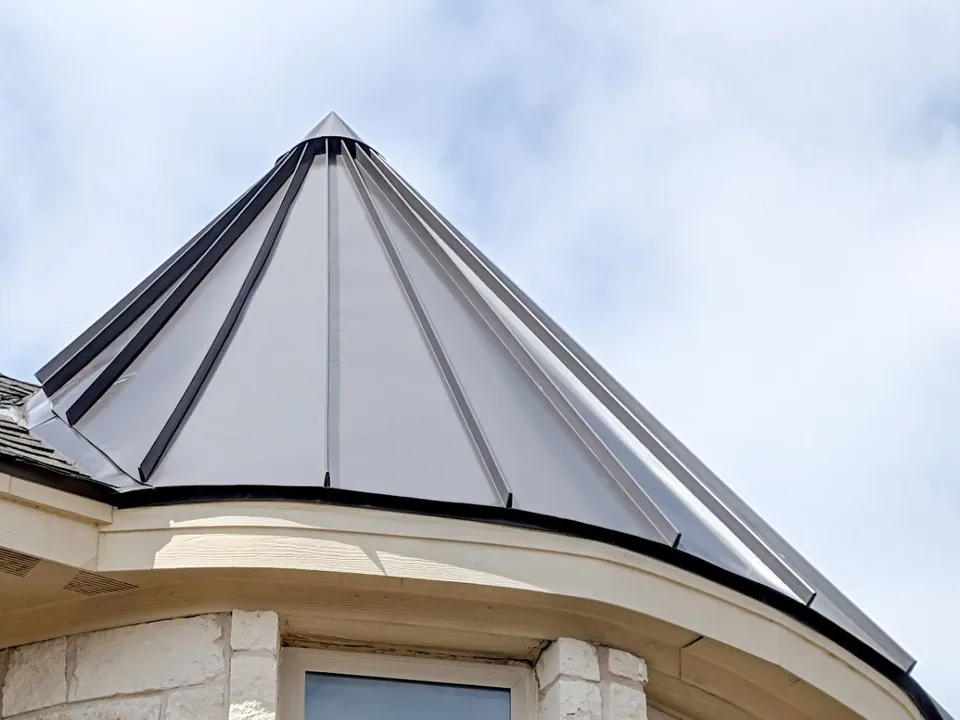
Photos from the field. Select one to enlarge it.
Field Videos
From the field
A real job, filmed and explained.
Metal Roof Installation Details That Prevent Leaks, Leander
Metal roof installation details in Leander, the fastening and flashing techniques that separate a leak-free installation from one that fails early.
Watch on YouTubeCommon Questions
What homeowners ask
Standing seam or exposed fastener, which should I choose?
Standing seam hides and protects the fasteners, handles thermal movement better, and generally lasts longer with less maintenance. Exposed fastener panels cost less up front but rely on hundreds of gasketed screws that age in the heat. We lay out both honestly for your roof and budget.
Does hail ruin a metal roof?
Hail can dent metal cosmetically without breaking its water protection, and that distinction matters. Thicker gauges and textured finishes hide impact better. We document what the hail actually did, cosmetic versus functional, so decisions rest on the roof, not on fear.
Is a metal roof loud in the rain?
Over a solid deck with underlayment, the setup used on homes, a metal roof is close to an asphalt roof in sound. The rain-on-a-barn reputation comes from open-frame buildings with no decking beneath the panels.
Is a metal roof worth it in a hot climate?
Often yes. Reflective coatings shed heat, panels handle thermal movement when installed with the right clips and fasteners, and hail performance is strong for thicker gauges. The honest trade-offs are upfront cost and the importance of installer skill: detailing quality decides everything.
Why is my metal roof leaking?
The most common sources are backed-out or mis-driven fasteners, failed washer gaskets, dried sealant at seams and penetrations, and incorrect flashing at chimneys and transitions. The leak often shows far from the source because water travels along the ribs, which is why diagnosis comes before any repair quote.
Can you repair a metal roof without replacing it?
Usually, yes. Fastener and washer replacement, seam resealing, boot replacement, and targeted panel work solve most problems. Replacement only enters the conversation when panels or coatings are failing broadly, and if that is the case you will see the documentation that shows it.
Get Started