
Learning Center · Cost Education
Roof Repair & Replacement Cost Factors in Texas
Two identical-looking roofs can carry very different price tags, and most homeowners never learn why. This guide explains the factors that actually move roofing cost in Texas, so a quote reads like information instead of a mystery.
Updated October 23, 2026
Read This First
The short version
- Six things set the price of a roof: size, pitch, materials, decking, details, and timing.
- Bigger costs more, steeper costs more on top of that, and complexity multiplies it again.
- Decking is the wildcard, because no one can see it until tear-off.
- Most roof repairs start around $500, which is a floor for sending a crew and setting up safely, not a rate.
- Quotes differ in what they include, so line up the scopes before comparing the totals.
For numbers that fit your roof, start with Get Help or call or text 512-575-5052.
Short version: 6 min. Full page: 15 min. Want the detail? Each section below opens with a tap, or switch to Full at the top to open them all.
The Short Version
What actually drives roofing cost?
Size, pitch, materials, decking, details and timing set the price, so a quote that cannot explain these needs questions.
The six cost drivers
Six things set the price of a roof: size, pitch, materials, decking, details, and timing. Each one is measurable. The list in full: total roof area and pitch, the material class chosen, the condition of the decking underneath, the number of penetrations and flashing details, tear-off layers, access and staging difficulty, and code items like ventilation that a permit can require. Labor market timing matters too, especially in the months after a major hailstorm. None of these are secrets. A quote that cannot explain itself against these factors deserves more questions.
The Number People Ask For
What does a new roof cost on a 2,000 square foot house?
As of October 2026, a new architectural shingle roof on a one-story, 2,000 square foot house in Texas runs about $13,100 to $20,100 at The Roof Shepherd's prices. That is a planning range for a roof of 24 to 30 squares, not a quote. The low end is a house with no attached garage. With a two-car garage, about 28.5 squares, the range is about $15,500 to $19,100. Here is the math, so you can check it.
The roof is bigger than the floor
Roofers price by the square. One square is 100 square feet of roof. A 2,000 square foot house does not have a 2,000 square foot roof, because the roof also covers the overhangs and the garage, and a sloped surface is larger than the floor under it.
Example: 2,000 square feet of living space plus about 150 square feet of overhang, at a common 6/12 slope (the roof rises 6 inches for every 12 inches across), is about 24 squares. Add a 400 square foot garage and it is about 28.5. A two-story house with the same floor space has a smaller roof, but it costs more per square to work on.
What moves the number
A steep roof, a second story, or a roof with many ridges and valleys costs more per square. Rotted decking past the first two sheets, extra old layers to tear off, and items the local code requires add to the total. The roof cost guide walks through each one. For local figures, see roof cost in Round Rock.
Get the number for your house
Within about an hour of Round Rock, an inspection with a written report is $100, paid at the visit; set it up by call or text at 512-575-5052. Anywhere in Texas, a $50 remote estimate measures your roof from aerial images, with no visit needed.
| Shingle | Per square | About, per square foot of roof | 24 square roof | 30 square roof |
|---|---|---|---|---|
| Architectural asphalt shingle | $545 to $670 | $5.45 to $6.70 | $13,080 to $16,080 | $16,350 to $20,100 |
| Class 4 impact-resistant shingle | $600 to $735 | $6.00 to $7.35 | $14,400 to $17,640 | $18,000 to $22,050 |
Checking a Quote
Is $30,000 too much for a roof?
Divide the quote by the measured squares and compare the per-square number to the planning ranges below.
The short answer
It depends on the roof, not the total. Divide the quote by the roof’s measured squares. On a 24 square shingle roof, $30,000 is $1,250 a square; on 30 squares it is $1,000. Our architectural shingle range is $545 to $670 a square and Class 4 is $600 to $735. Far above that, ask what else is in it.
Do the division first
A quote without a square count cannot be judged. One square is 100 square feet of roof surface, and a one story 2,000 square foot house usually measures somewhere in the low to mid twenties. Ask the roofer for the squares the price covers, then divide. If the estimate never states its squares, that is the first thing to send back, and the estimate anatomy guide shows what a complete one looks like.
When $30,000 is a fair number
Some roofs cost that much for honest reasons. A large or two story roof of 40 squares or more, a steep pitch that needs harnesses and staging, a cut up roof with many valleys and dormers, standing seam metal or tile instead of shingle, or decking that has to be replaced sheet by sheet. Each of those should appear as its own line, so you can see which one moved the total. Metal and tile planning ranges are on the estimate anatomy page.
When it is too much
If the quote is for architectural shingle on a plain one story roof and the per-square number lands far above $670, something is padded or missing. Common causes: waste counted twice (once in the square count and again in the rate), a decking allowance priced as if the whole deck will fail, or an insurance scope copied into a retail bid. Get a second written estimate on the same squares and the same named products before deciding.
The Physical Factors
Size, pitch, and complexity
Roof size sets the base number, steep pitch raises it, and valleys, dormers and vents raise it again.
How area and slope multiply
Bigger costs more. Steeper costs more on top of that. Roof area sets the baseline, since more squares means more material and more labor. Pitch multiplies it, because steep roofs are slower and require more safety equipment. Complexity multiplies it again: valleys, dormers, hips, dead valleys, and every penetration (pipes, vents, skylights, chimneys) each add flashing work, and flashing is where roofs succeed or fail. A simple gable roof and a cut-up roof of the same square footage are not the same job.
Material class and impact rating
Each material tier buys lifespan at a different price, and any Class 4 insurance discount is the carrier's to set.
What each material tier buys
Materials come in tiers, and each tier buys lifespan. Three-tab shingles, architectural shingles, Class 3 and Class 4 impact-rated shingles, metal, and tile each sit at a different price point. In hail-prone Texas, impact-rated shingles cost more up front; some insurers offer premium discounts for UL 2218 Class 4 products, though discounts vary by carrier and policy and should be confirmed with your insurer directly, never assumed.
What is under the shingles
Decking cannot be seen until tear-off, so a quote that promises a final number before then is guessing.
Decking is the honest wildcard
No one can see your decking until tear-off. That is the honest wildcard in every roof price. Rotted or delaminated decking found during tear-off must be replaced before new material goes down. A documented inspection narrows the guess: attic-side moisture staining, soft spots, and sag patterns signal decking risk before the first shingle comes up. Quotes handle this differently, some include a decking allowance, some price it per sheet as found, which is one reason otherwise similar bids diverge.
Code items, ventilation, and permits
A new roof can trigger code items that a repair does not, like vents, drip edge and underlayment.
Code upgrades on replacement
Replacement can trigger code upgrades that repairs do not. Ventilation corrections, drip edge, and underlayment standards are the common ones. These are real costs that protect the roof system, not padding. A bid that skips required code items is not cheaper; it is incomplete.
Access, staging, and tear-off layers
Second stories, tight lots and extra shingle layers slow the crew and add disposal, so they belong in the written scope.
Access and complexity
Hard-to-reach roofs take longer, and time costs money. Second-story roofs, tight lot lines, landscaping to protect, and long carry distances all slow a crew down. Multiple existing shingle layers raise tear-off and disposal cost. These factors are visible from the ground and should be reflected in the written scope.
The Threshold Question
When repair math stops working
Repair stops making sense once a roof has aged out, which is a condition call, and most repairs start around $500.
Where repair stops making sense
Repair works until it stops working, and the line is condition, not a formula. The honest threshold is condition-based: localized damage on a roof with remaining service life favors repair; widespread granule loss, brittle shingles that break during the repair itself, or storm damage across multiple slopes push toward replacement. The failure mode to avoid is serial repairs on a roof that has aged out, paying replacement money one patch at a time. This is exactly the call that documentation exists to support: repair versus replacement should be decided from photographs and findings, not from a sales quota.
Most roof repairs in the Round Rock area start around $500
What a repair actually starts at
That figure is a floor, not a rate: it reflects the minimum it costs to send a crew, set up safely, and do a small job properly with matching material. A single lifted shingle and a half-day flashing repair can land at the same number, because the cost is mobilization before it is materials.
Above that floor, price tracks the work: how many slopes are involved, whether the deck underneath is sound, whether the repair needs matching material that is no longer produced, and whether access needs staging. A repair that turns out to need decking replaced is a different job than the one that was quoted, and you should be told that before it starts, not after.
Repair or Replace
Can you repair just part of a roof?
Yes, when the damage is in one area and the rest of the roof has life left; the code allows it and so do we.
The short answer
Yes. A roof can be repaired one slope, one valley or one section at a time when the damage is contained and the rest of the roof has life left. The code Round Rock area cities adopt allows repair; it does not force a new roof. What decides it is the surrounding shingles’ condition and whether matching material still exists.
When a partial repair is the right call
Localized damage on a sound roof favors repair: a tree limb through one slope, wind lifting along one rake, a failed pipe boot, a valley that was never flashed right. The repair is done to the same standard as a new roof, with new underlayment where the deck is exposed, new flashing, and shingles nailed to the manufacturer’s pattern. A repair that reuses old flashing or seals a lifted shingle with caulk is not a repair, it is a delay.
When it stops making sense
Three things turn a repair into a replacement. First, brittleness: in our field work, shingles past about fifteen years in Texas sun often crack when lifted, so the repair breaks more than it fixes. Second, match: a discontinued color or profile leaves a patch that looks like a patch and may not seal to the old course. Third, spread: damage on several slopes after a storm is a whole-roof condition. The repair versus replacement call is made from photos and findings, not from a quota.
What the code says about layers
The code does not limit how much of a roof you repair in a year. It does set two rules that come up on partial jobs: a full replacement takes every old layer off down to the deck, and a new layer over an old one is only allowed where there is one layer now, the deck is sound, and the old covering is not wood shake, slate or tile. Round Rock and Austin are on the 2024 IRC, where the recover rule is R908.4; the 2015 through 2021 editions number it R908.3.1.1. Read the permit and code guide for your city’s edition.
A Rule From Another State
What is the 25% rule for roofing?
Florida makes a roof meet code once over a quarter is repaired in a year; Texas has no such rule.
The short answer
The 25 percent rule is a Florida building code rule, not a Texas one. Florida’s Existing Building Code bars repairing, replacing or recovering more than 25 percent of a roof in any 12 month period unless the whole roof meets current code. The residential code Texas cities adopt has no such provision. In Texas, repair size is a condition call.
Where the rule actually lives
Florida Building Code, Existing Building, section 706.1.1 reads: “Not more than 25 percent of the total roof area or roof section of any existing building or structure shall be repaired, replaced or recovered in any 12-month period unless the entire existing roofing system or roof section is replaced to conform to requirements of this code.” Florida Statute 553.844(5) then carves out roofs built or replaced under the 2007 Florida code or later: for those, only the repaired portion has to meet current code. The Florida Building Commission’s own code change record shows 706.1.1 as a Florida addition with no counterpart in the model International Existing Building Code text.
What Texas cities adopt instead
Texas sets the 2012 IRC as the floor for every city under Local Government Code 214.212, and cities adopt later editions by ordinance; Round Rock and Austin are on the 2024 IRC. The reroofing section of that code, R908, covers structural loads, taking old layers off on a replacement, and when a second layer is allowed. We read the 2021 and 2024 text and found no percentage limit on repairs. We did not read Round Rock’s local amendment chapter this session, so if a Texas city has added one by ordinance, it would be there; none has turned up in our city research.
Why you hear it in Texas anyway
Two other things get called the 25 percent rule. One is a contractor rule of thumb: when a repair estimate approaches a quarter of the replacement price, replacement usually wins, because you are paying replacement money one patch at a time. That is a judgment, not a law. The other is carrier practice on matching and partial replacement, which comes from your policy’s own terms, not from a code. Ask the person citing the rule which one they mean, and where it is written.
Storms and Deductibles
The deductible is real, by law
Since September 1, 2019, Texas law (HB 2102) makes it illegal for a contractor to waive or rebate your deductible.
Your deductible in Texas
Your deductible is real, and in Texas it cannot legally be waived. After a storm you will hear creative math anyway. Here is the non-creative version: since September 1, 2019, Texas law (HB 2102) makes it illegal for a contractor to waive, absorb, or rebate your insurance deductible, and insurers may require proof that you paid it. Any pitch built on a vanishing deductible is a legal problem wearing a sales smile. We advise and educate you on your options and rights, document the roof, and submit documented supplements. We are not a public adjuster and never negotiate or settle a claim for you. Our written records are yours to use in your own conversation with your insurer, and we do not promise outcomes. Storm timing also moves prices: after a major hail event, demand spikes, materials tighten, and out-of-town operators arrive. A documented, unhurried decision is worth more in that exact moment than in any other.
Reading a Bid
Why three quotes come back three different numbers
Quotes differ on decking, materials, code items, warranty and haul-off, so compare what each has.
Why two bids never match
Different decking assumptions, different material tiers quoted as equivalent, included versus excluded code items, ventilation corrections priced or ignored, warranty registration handled or skipped, and disposal, permits, and steep-slope labor treated differently. When quotes diverge, the explanation lives in the scope, not the total. Line up what each bid includes before comparing what each bid costs. A documented inspection report gives every bidder the same facts to price against, which is the fastest way to make quotes comparable.
Direct answer
Still have a question?
Ask it in plain English and get a straight answer now. Nothing is gated, and you are not handing over your details to read one.
No sign-up, no callback
Ask it in plain English and get a straight answer now. Nothing is gated, and no phone number is needed to read one.
When You Are Ready
When you are ready
Roof Replacement
Here is how we help. When you want numbers that fit your roof instead of a national average, we measure it, write the scope line by line and price it from the same register this page explains.
Or call or text 512-575-5052.
Field Photos
On the job
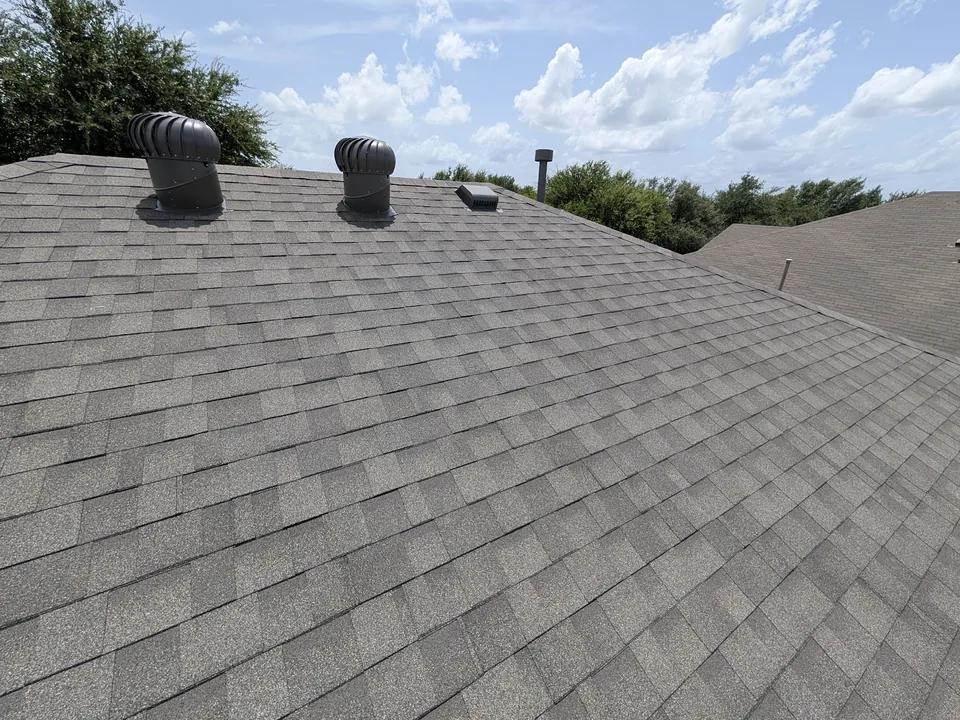
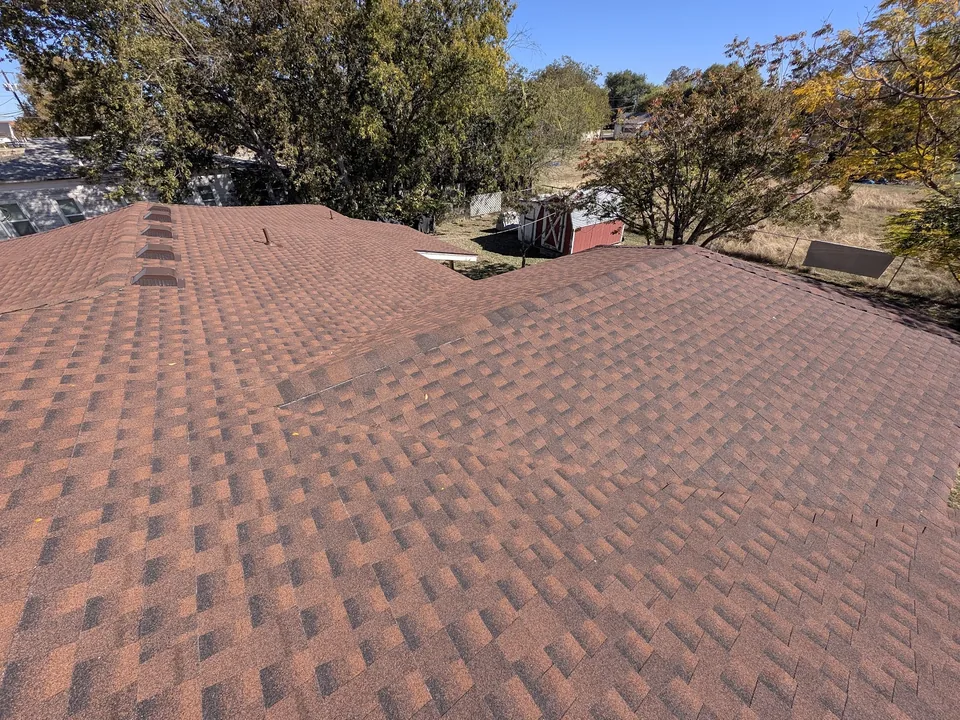
Photos from roofs we have worked on. Select one to enlarge it.
Cost questions, answered
Roofing cost questions, answered
Why does my neighbor’s roof quote look so different from mine?
Because roofs differ in pitch, complexity, decking condition, and material class even when houses look similar, and because quotes differ in what they include. Compare scopes line by line before comparing totals.
Is the cheapest bid a bad idea?
Not automatically, but a bid that is far below the others usually excludes something: code items, decking allowance, proper flashing work, or warranty registration. Ask what is not in it.
Can a roofer cover my deductible?
No. In Texas, waiving or absorbing an insurance deductible has been illegal since September 1, 2019 under HB 2102, and your insurer may require proof of payment. Treat the offer as a warning sign about everything else in the pitch.
Does an impact-rated roof lower my insurance premium?
Some Texas insurers offer discounts for UL 2218 Class 4 impact-rated shingles, but programs vary by carrier and policy. Confirm the discount in writing with your insurer before counting it in the math.
Numbers For Your Address
Where to go from here
Why general figures only go so far
Your roof is a specific object with a specific condition, and general factors only go so far. A documented inspection turns this guide into numbers that apply to your address, and the record is yours to keep whatever you decide. Start with Get Help, or read how a documented inspection works first.