
Learning Center · Interior
Paint Sheens Explained, From Flat to Gloss
Sheen is how shiny paint looks once it dries, and it changes how a room looks and how well the walls clean. This guide explains each sheen, how the paint makers measure it, and where each one belongs.
Updated October 11, 2026
Read This First
The short version
- Sheen runs from flat, with almost no shine, through matte, eggshell, satin and semi-gloss to gloss.
- Higher sheens clean more easily but show every bump and patch in a wall.
- Benjamin Moore suggests flat for ceilings, eggshell or satin for busy walls, and semi-gloss or gloss for trim, doors and cabinets.
- On our Georgetown job the walls got satin and the ceilings a softer eggshell to cut glare overhead.
To choose sheens for your rooms, start with Get Help or call or text 512-575-5052.
Short version: 2 min. Full page: 4 min. Want the detail? Each section below opens with a tap, or switch to Full at the top to open them all.
Direct Answer
What are the paint sheens?
Six common sheens run from flat to gloss, and each step up adds shine and washability.
From flat to gloss
Sheen is shine. Flat and matte paints reflect very little light and hide wall flaws best. Eggshell and satin have a soft glow and wash better. Semi-gloss and gloss are shiny, tough and easy to wipe, which is why they go on trim and doors. Sherwin-Williams describes its flat category as paint that creates no to very low reflectance when dry.
| Sheen | Benjamin Moore suggests | Sherwin-Williams suggests |
|---|---|---|
| Flat | Ceilings, walls in low traffic spaces | Adult bedrooms, formal living rooms, ceilings, uneven or textured walls |
| Matte | Walls, living rooms, dining rooms, bedrooms | Living rooms, dining rooms, exterior siding |
| Eggshell | High traffic walls, living rooms, dining rooms, bedrooms | Hallways, woodwork, children’s bedrooms, family rooms, exterior surfaces |
| Satin or pearl | High traffic walls, trim, doors, cabinets | |
| Semi-gloss | Trim, doors, cabinets, wainscoting | Kitchens, bathrooms, utility areas, closet doors, trim |
| Gloss | Trim, doors, cabinets, architectural details | Trim, cabinets, doors |
The Science
How paint makers measure sheen
Gloss is read at a 60 degree angle and sheen at 85 degrees, on a 0 to 100 scale.
Light at an angle
Sheen has a number. Sherwin-Williams explains that gloss is measured at a 60 degree angle and sheen at an 85 degree angle, scored from 0 for no gloss to 100 for mirror-like. Its examples include Emerald flat at 3 at 85 degrees and Emerald satin at 11 at 60 degrees. Each brand and product sets its own numbers, so one maker’s eggshell is not exactly another’s.
What that means for you
Names are not standard. If you are touching up or matching an existing wall, the product name and sheen from the original job matter more than the word on the label. Keep the can labels from every paint job with your house records.
Choosing
Choosing a sheen room by room
Flat for ceilings, eggshell or satin for walls, and semi-gloss for trim and wet rooms.
Living areas and bedrooms
Most walls suit eggshell or satin. They clean better than flat and still hide small flaws. Benjamin Moore says satin offers better stain resistance and durability than lower sheens, including eggshell.
Kitchens and bathrooms
Wet rooms need a wipeable finish. Sherwin-Williams lists semi-gloss for kitchens and bathrooms, and both makers put semi-gloss and gloss on trim and doors.
Ceilings
Ceilings usually go flat. Low sheen hides roller marks and the long shadows that ceiling lights throw. A wall finish with more shine on a ceiling can show every seam in the drywall. Our guide to drywall finish levels explains why.
From Our Work
A real example: satin walls, softer ceilings
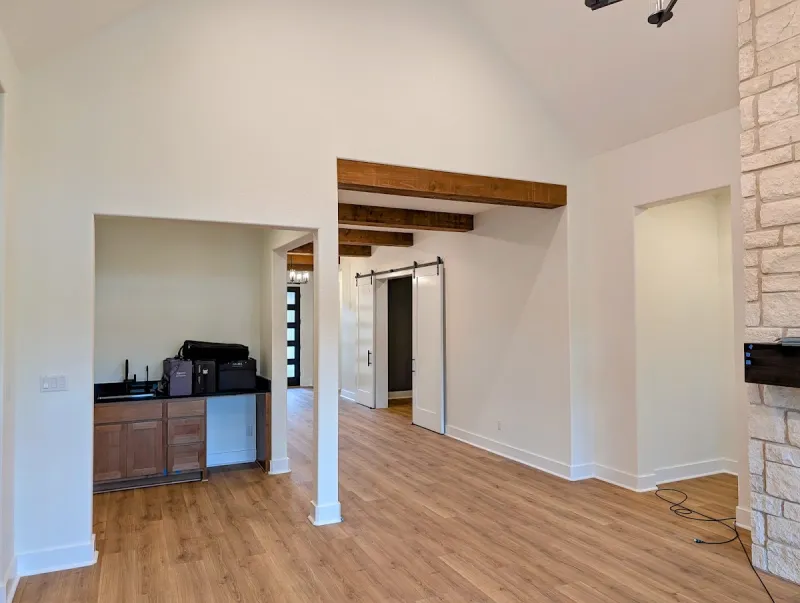
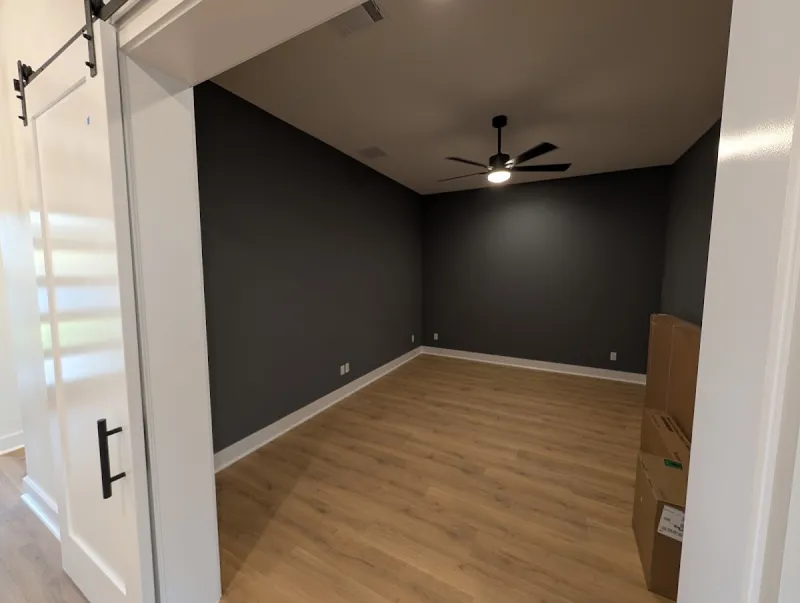
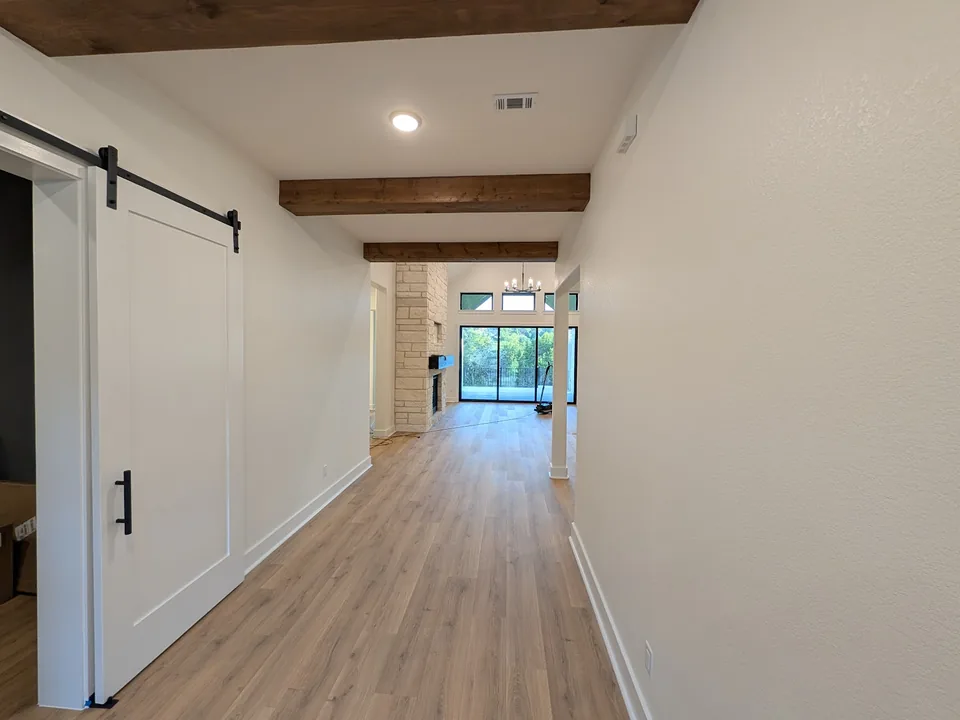
On our Georgetown job the walls got satin, the ceilings eggshell, and the media room dark gray.
What we did and why
Sheen was chosen by room. In a new home in Georgetown, our painting division put satin white on the walls of the main living spaces for a durable, cleanable surface, and kept the ceilings in a softer eggshell, a step below the satin walls, to cut glare overhead under tall ceilings, recessed lights and big windows. The media room got a darker gray for screen viewing. See our interior painting page for how we plan a whole house.
These photos are from our own interior painting job in a new home in Georgetown, documented in our blog posts on the project before move-in and the finished result.
Common Questions
Questions homeowners ask
What is the most popular sheen for interior walls?
Eggshell and satin are common wall choices because they wash better than flat and still hide small flaws. Benjamin Moore lists eggshell for high traffic walls and living areas, and satin for high traffic walls, trim and doors.
What sheen should a ceiling be?
Usually flat. Both Benjamin Moore and Sherwin-Williams list flat for ceilings, because low sheen hides roller marks and the shadows ceiling lights throw.
Is satin or semi-gloss better for bathrooms?
Semi-gloss is the usual pick for bathrooms and kitchens because it wipes clean and handles moisture. Satin can work on bathroom walls in rooms with good ventilation.
Why does my touch-up paint look shinier than the wall?
Sheen varies by product and by how the paint was applied, and fresh paint can read differently from aged paint. The same product and sheen as the original job, applied the same way, matches best.
Keep Learning