
Roofing 101 · The Rules Around Your Roof
Roof Permits and Building Codes by City: Round Rock and Nearby Texas Cities
Whether a re-roof needs a permit in Texas depends on the city, and sometimes on which of the city's own documents you read. This is the answer for thirteen jurisdictions around Round Rock and Austin, taken from their ordinances, fee schedules and permit pages, with a mark on every cell that says how we know. Where two documents disagree, both are shown. Nothing here is "no rules": the code applies to every repair whether or not anyone pulls a permit.
Updated October 19, 2026
Read This First
The short version
- Whether a re-roof needs a permit in Texas depends on the city. The building code applies to every repair, with or without a permit.
- Some cities, like Austin and Round Rock, publish no-permit guidance for a like for like re-roof, but their codes do not exempt roofing, so confirm with your city.
- As read on August 28, 2026, Round Rock's city page says no permit is needed, but its adopted 2024 code does not exempt roofing.
- Texas has no state roofing license, so ask any roofer who says licensed who issued it.
- Ice and water shield at the eaves and a Class 4 discount are not code, and nobody may promise you a percentage.
Ask what your city requires: call or text 512-575-5052 or use Get Help.
Short version: 3 min. Full page: 17 min. Want the detail? Each section below opens with a tap, or switch to Full at the top to open them all.
The Floor
What the state sets, and what your city adds
Texas has no state roofing license, and the repair minimum is the 2012 residential code.
Three layers: a statute, an ordinance, and the shingle wrapper
Texas has no statewide roofing license and no statewide building department. What it has is Local Government Code section 214.212: the International Residential Code as it stood on May 1, 2012 is adopted as a municipal residential building code in Texas, and it applies to "all construction, alteration, remodeling, enlargement, and repair" of homes in a city. A re-roof is a repair. That sentence is why the code applies in Round Rock or Austin even though neither city pulls a permit for a like for like re-roof.
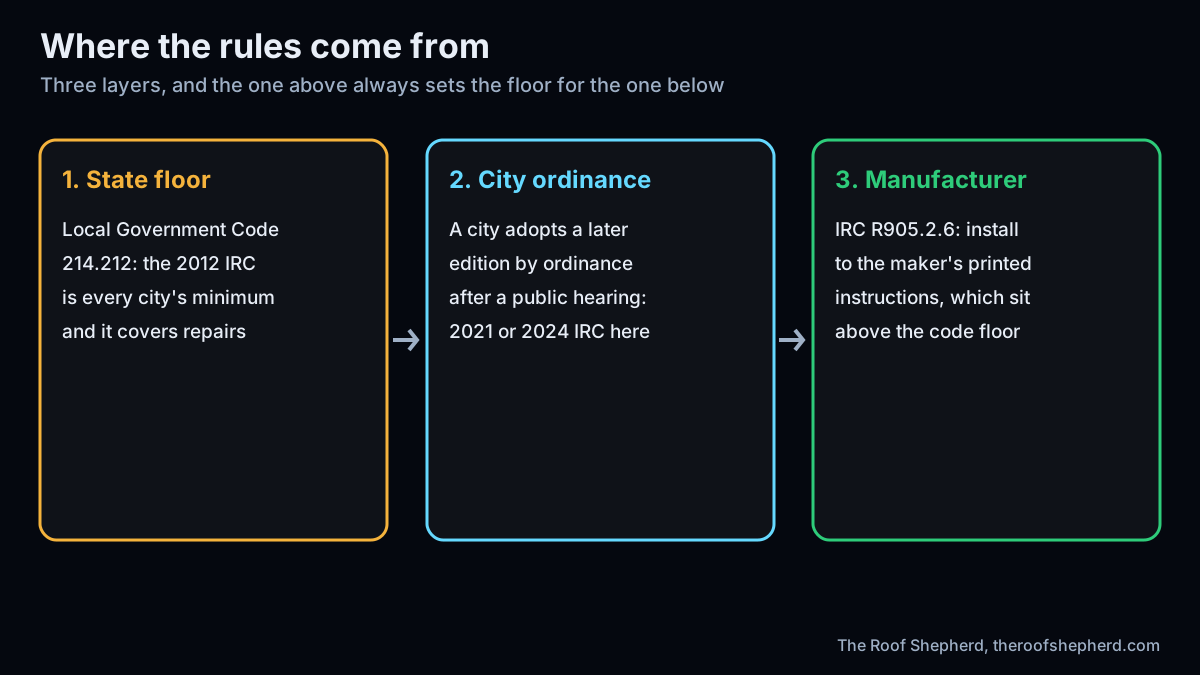
Cities may adopt a later edition and local amendments by ordinance, and the statute requires a public hearing before a local amendment. Most of the Round Rock area cities on this page are on the 2021 or 2024 editions; Temple is still on 2015. The edition matters because section numbers move between editions, and an adjuster or an inspector will hold you to the one your city adopted. Above the code sits the manufacturer: the IRC ties shingle fastening to the maker's approved installation instructions (R905.2.6 in the 2021 edition sets four nails as the floor and defers to the manufacturer for more), so where the wrapper asks for more than the code, the wrapper wins.
One correction worth stating plainly, because it has been repeated in trade press: Texas did not adopt the 2024 codes statewide on September 1, 2026. That date belongs to a TDLR rule for licensed air conditioning and refrigeration contractors (16 TAC Chapter 75), which updated the code editions those contractors work to. It does not change the building code for a house re-roof, which each city sets by ordinance. The residential code edition is set city by city, by ordinance, and nothing changed statewide on that date.
Quote the section number of the edition the city actually adopted. In the 2015, 2018 and 2021 editions the two-layer rule is R908.3.1.1; the 2024 edition renumbers Chapter 9, so quote the section from the city's adopted edition rather than from memory.
Permits
Does a re-roof need a permit? City by city
Some cities publish no permit guidance for a like for like re-roof while their codes exempt nothing, so confirm first.
Thirteen jurisdictions, one table, a mark on every cell
Three cities near us are mostly exempt and three are not. The pattern around Round Rock is that Austin, Round Rock and San Marcos are largely permit exempt for a like for like re-roof, while Georgetown, Buda and New Braunfels require a permit, an inspection and contractor registration. A roofer who assumes "nobody around here permits roofs" earns a stop work order in Georgetown. A roofer who assumes every city permits roofs wastes the homeowner's money in Round Rock.
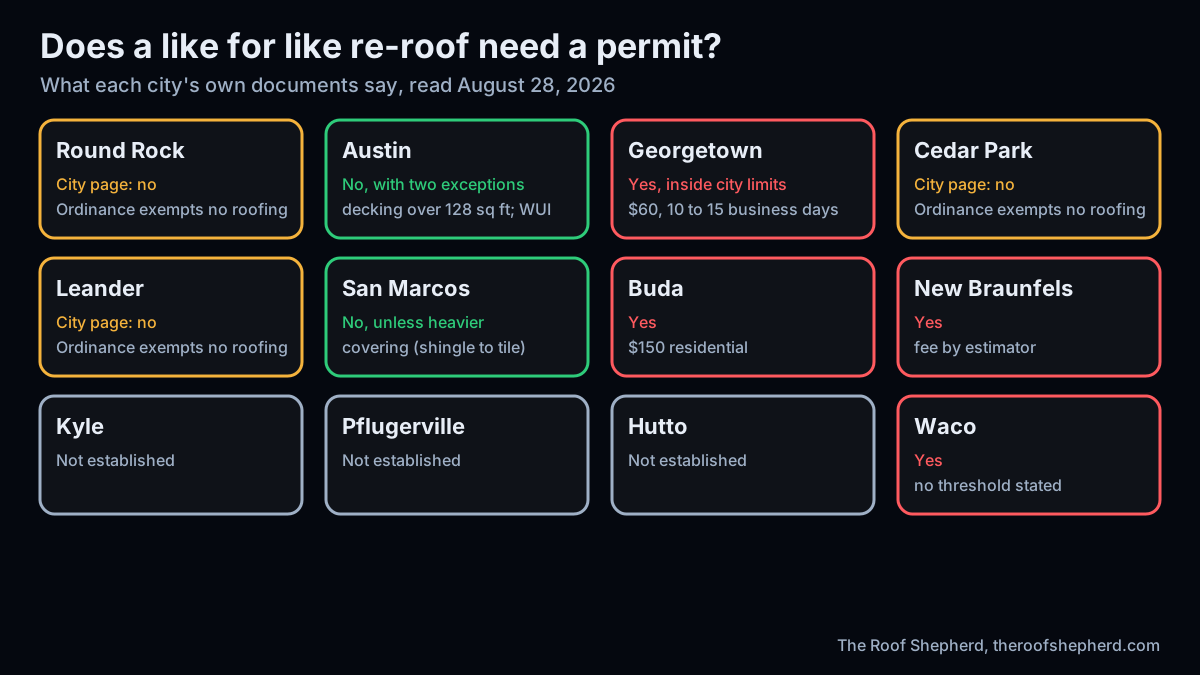
Every cell below was read at a primary source, first on August 28, 2026 and again on October 12, 2026: the adopting ordinance, the code text, the city's own permit page or its published fee schedule. "Not established" means we looked and found nothing usable; it is never a finding that no requirement exists. Fees are the schedule in force when read.
When The Roof Shepherd manages a re-roof in a permit city, the permit and its fee are their own line on the estimate, and the city's inspection, where the city requires one, is booked before the job closes. The roof replacement service page describes the rest of the job.
| City | Permit for a like for like residential re-roof | Fee | Contractor registration | Adopted residential code |
|---|---|---|---|---|
| Round Rock | The city page says no permit for a residential re-roof. The adopted 2024 IRC does not exempt roofing work, so this is the city's practice, not a settled exemption (see the section below). Structural changes need a remodel permit. | n/a | Only with a permit; roofing is not a listed registration type | 2024 IRC, Ordinance O-2025-335, effective January 1, 2026 |
| Austin | No for asphalt over asphalt, unless the home is in the wildland-urban interface and half or more of the roof is replaced. Replacing more than 128 square feet of decking needs a permit. | not established | Roofing is not a listed registration trade | 2024 IRC, Ordinance 20250410-040, effective July 10, 2025; design wind speed 105 mph; ice barrier not required |
| Georgetown | Yes inside the city limits; not required outside them. 10 to 15 business days, longer after a hail storm. | $60 ($50 permit plus $10 technology fee) | Yes, as a "Roofing Contractor", before applying, no fee; the city publishes its list of active roofing contractors | 2021 IRC, Ordinance 2023-43, effective November 1, 2023; ice barrier not required |
| Cedar Park | The city page lists "Roof Covering (non-structural)" as exempt and says the list is not comprehensive. The adopted 2021 IRC does not exempt roofing work. Decking replacement is an open question the city has not answered in writing. | not established | Yes, all contractors, no fee, through the city portal | 2021 IRC, effective June 1, 2022 (Ordinance CO16.22.02.24.E1) |
| Leander | The city page (leandertx.gov/325) lists "re-roofing" among exterior work that does not require a permit. The adopted 2021 IRC does not exempt roofing work. | none in the fee schedule | Yes, general contractors and subcontractors, no fee | 2021 IRC, Ordinance 25-034-00, passed May 1, 2025, effective July 1, 2025 |
| San Marcos | No, unless the new covering is heavier than the old one (shingle to tile does need one). The city decides re-roofs case by case on its Permit Requirement Determination form. | n/a | The city runs a contractor license program (Chapter 14, Article 11) with an exam and five years of documented experience; roofing is not named in it and roofers appear on the city roster as builders. Which credential a roofer needs is not published. We treat the Building license as required until the city says otherwise in writing. | 2021 IRC, Ordinance 2023-09, adopted February 7, 2023 |
| Kyle | Not established | not established | Not established | 2021 IRC, effective date not published |
| Buda | Yes; the city's permits page lists re-roofing | Not published now: the city's link to its fee schedule returns an error (the fiscal year 2025 schedule listed $150 residential, $200 commercial) | Yes, $100 on the fiscal year 2025 schedule | 2024 IRC, effective date not published |
| New Braunfels | Yes | Varies; the city publishes a permit fee estimator | Yes, $200 a year, expires December 31; general liability with the city as certificate holder ($1 million commercial, $300,000 residential) | 2021 IRC, effective October 23, 2023 |
| Pflugerville | Likely: the fee schedule lists a residential re-roof permit; the city has not said so in writing | $80 per permit plus a $30 technology fee (fiscal year 2027 schedule) | Not established | 2021 IRC (City Code Sec. 150.02) |
| Hutto | Not established: roofing is not on the city's permit list | not established | Yes, a step in the city's online permit application | 2024 IRC |
| Temple | Yes; the city lists roofs among the upgrades that need a permit | Not established (the city's fee PDF link returns an error) | No separate registration; general contractors pay an $80 annual fee before permits are approved | 2015 International Codes |
| Waco | Yes; roofing is on the city's list of work that needs a permit | $125 plus a $15 technology fee | Not established | 2024 IRC, effective January 1, 2026 |
"Not established" means we looked and found nothing usable. It never means "not required". Fees are the schedule in force when read and change with the fiscal year.
Georgetown is the one nearby city that requires permit, inspection and registration, and its rules stop at the city limits. Plan its 10 to 15 business day queue into the schedule, longer after hail.
Read Both
The three cities where the website and the ordinance disagree
On August 28, 2026, three cities' web pages said no permit was needed while their adopted codes did not exempt roofing.
Round Rock, Cedar Park and Leander
Round Rock's building page says, in those words, that the city does not require a permit for a residential re-roof. Cedar Park's page lists "Roof Covering (non-structural)" among exempt work. Leander's permits page lists "re-roofing" among the exterior work that does not require a permit. All three are the city speaking, and a contractor who follows a city's published guidance is in a defensible position.
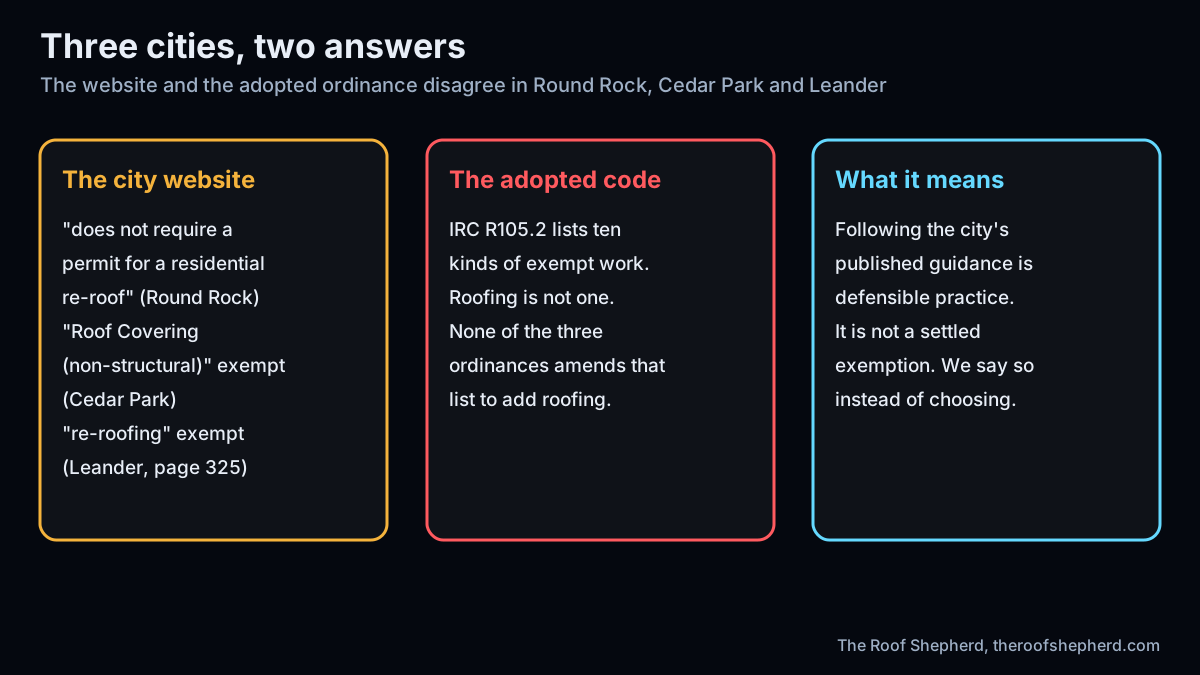
But each of those cities has adopted the IRC by ordinance, and IRC R105.2 lists ten kinds of building work exempt from a permit. Roofing is not one of them. We read all three adopting ordinances: Cedar Park amends that list in exactly one place (fences), Leander's ordinance leaves R105 untouched and never uses the word roof, and Round Rock's 2024 adoption amends nothing in that chapter. So in all three, the adopted instrument requires a permit and the city's published guidance says one is not needed.
That is a real conflict between a webpage and an ordinance, and this page does not resolve it in either direction. We call it the city's administrative practice, we do not quote "no permit required" as settled to an adjuster or an inspector, and we would rather tell you that than pretend the question is closed.
When a customer, adjuster or inspector asks, cite the city page by URL and date and say the ordinance does not exempt roofing work. Never say "no permit required" without the qualifier.
Section Numbers
Which code edition your city is on, and why the section number matters
Round Rock, Austin and Buda use the 2024 code and most neighbors use 2021, so cite the city's own edition.
Round Rock and Austin are on the 2024 IRC; most neighbors are on 2021
Round Rock adopted the 2024 IRC by Ordinance O-2025-335 on December 18, 2025, effective January 1, 2026. Its own building page lists the 2024 edition. Two things trip people up there: the codified city code on Municode read 2015 when we checked it in August 2026, and the city's drip edge note still cites "the 2015 IBC, Section R905.2.8.5". R905 is an IRC section and R905.2.8.5 is the drip edge section in the 2021 edition; the city's adopting ordinance shows the 2024 edition replacing 2015 in the city code, so the citation is usable; the code name and year on the page are stale.
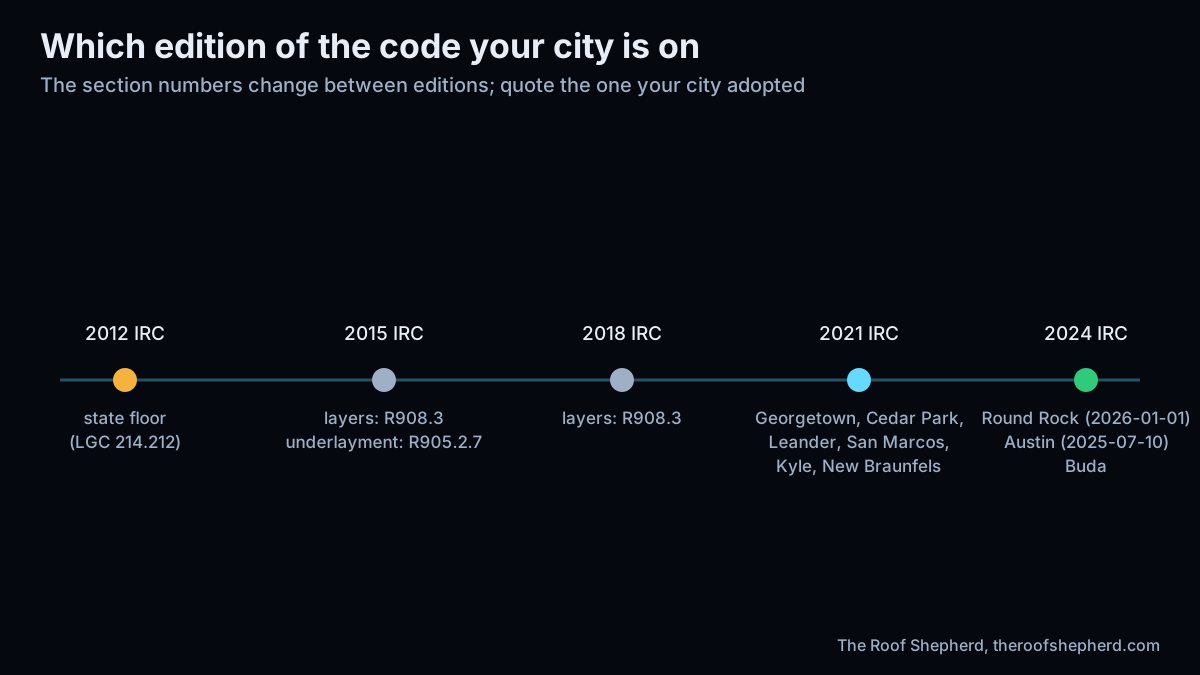
Austin adopted the 2024 IRC by Ordinance 20250410-040, effective July 10, 2025. Georgetown is on the 2021 IRC (Ordinance 2023-43, effective November 1, 2023). Cedar Park is on the 2021 IRC effective June 1, 2022. Leander passed its 2021 IRC ordinance on May 1, 2025, but the ordinance itself says it takes effect July 1, 2025; for any work between those dates the two month gap decides which edition applies. San Marcos, Kyle and New Braunfels are on the 2021 IRC; Buda is on the 2024 IRC.
The section number is the practical consequence. The rule that a roof may carry at most two layers is R908.4 in the 2024 edition (listed under its Exceptions), R908.3.1.1 in the 2015, 2018 and 2021 editions, and R907.3 in 2012.
Before a code argument, open the city's adopting ordinance, not a code summary site. Round Rock's Municode text is a codification lag, not the law in force.
Who Registers
Contractor registration: what each city asks for
Texas has no state roofing license, and five nearby cities register contractors while Round Rock and Austin do not.
No state license exists, so the word "licensed" should make you ask "by whom"
The Texas Department of Licensing and Regulation licenses dozens of trades and roofing is not one of them. There is no state credential that travels with the truck. What exists is a patchwork of municipal registrations: Georgetown registers roofing contractors by name and publishes the list; Cedar Park, Leander, Buda and New Braunfels register all contractors, with fees from nothing to $200 a year; Round Rock and Austin do not list roofing as a registration trade at all.
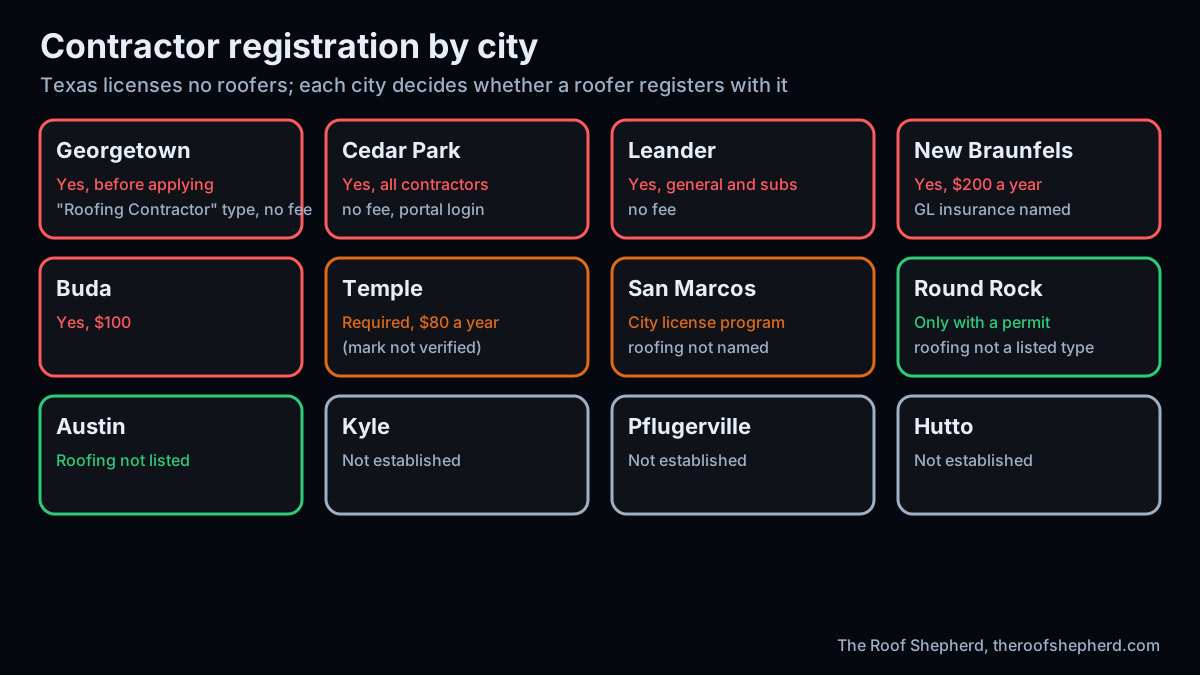
San Marcos is the one to read twice. The city runs a contractor license program in Chapter 14, Article 11 of its code, with an exam, five years of documented experience and continuing education. The word "roofing" appears nowhere in it, roofers on the city roster hold builder licenses, and which credential the building official requires of a roofer specifically is not published. Until the city answers that in writing, we treat the Building license as required.
Because no state license exists, a roofer who tells you they are "licensed" without naming the issuer is either describing a city registration, a manufacturer certification or an insurance certificate, or describing nothing. Ask which. It is a fair question and a useful one when you are choosing a roofing contractor.
Georgetown registration must be complete before the permit application; New Braunfels needs the city named as certificate holder on the liability policy and renews every December 31.
Always Applies
Rules that apply whether or not a permit is pulled
A permit changes who checks the work, not the code: layers, drip edge, underlayment, fasteners and vents still apply.
A permit changes who checks the work, not what the code says
Two layers is the ceiling. The IRC allows a recover only where the existing roof is sound, is not slate, clay, cement or asbestos-cement tile, and carries fewer than two layers; Georgetown's own permit page adds wood shake to its tear-off list and restates the two-layer rule. Drip edge at eaves and rakes has been mandatory since the 2012 edition, which is the state floor, so it is required in every Texas city that has not amended it out. Round Rock says so on its building page even though it pulls no permit.
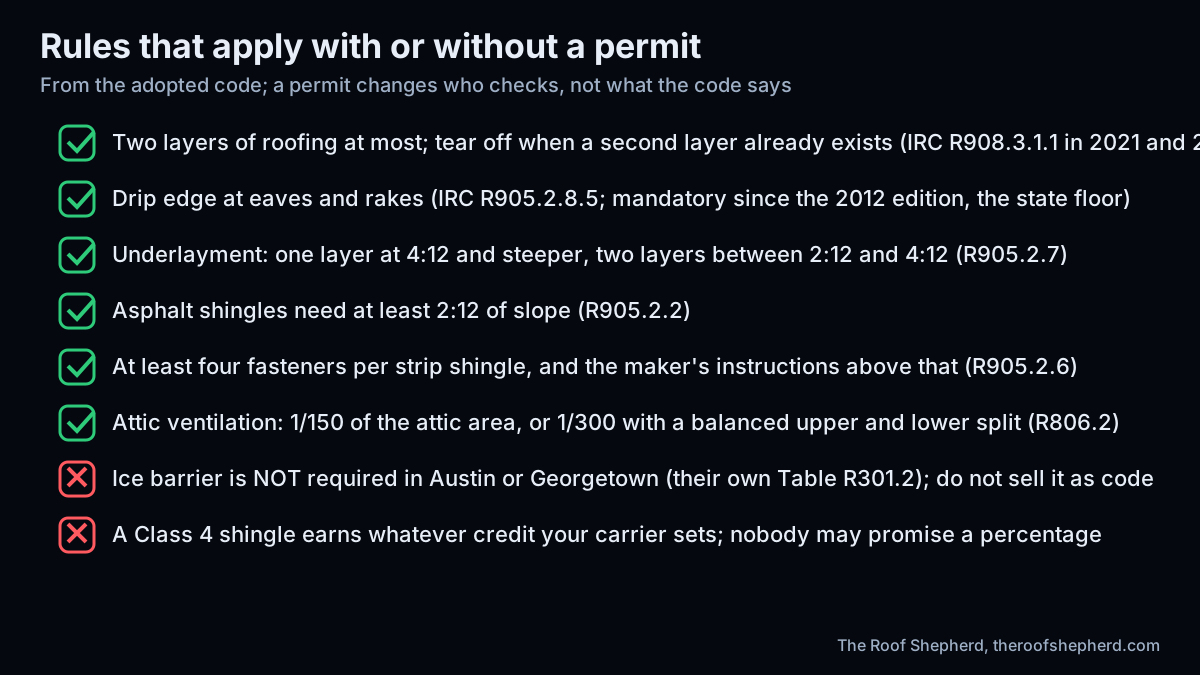
Underlayment is one layer at 4:12 and steeper and two layers between 2:12 and 4:12; below 2:12 asphalt shingles are not allowed at all. The code floor for fastening is four nails per strip shingle, and the manufacturer sits above that: an enhanced wind warranty typically calls for six nails plus the maker's starter, ridge and ventilation, and a roof nailed to the code floor while sold with that warranty has a warranty problem, not just a code one. Attic ventilation is 1/150 of the attic floor, or 1/300 when 40 to 50 percent of the vent area is high and the rest is low.
Two things Texas homeowners are sold as "code" that are not: ice and water shield at the eaves, which Austin's and Georgetown's own Table R301.2 mark as not required (it belongs at valleys and penetrations as a manufacturer detail or as an upgrade), and a Class 4 shingle "discount". The credit is real at some carriers and the amount is theirs to set; nobody may promise you a percentage.
Underlayment goes over the drip edge at the eaves and under it at the rakes; drip edge extends at least a quarter inch below the sheathing and two inches onto the deck, fastened at twelve inches or tighter.
ETJ
The address decides, not the mailing city
Georgetown's roofing rules stop at the city limits, so a Georgetown mailing address can sit outside them.
A Georgetown mailing address is not a Georgetown city limits address
Your mailing address can say Georgetown while the rules do not. The ring outside a city's corporate limits is its extraterritorial jurisdiction, and inside it the mail, the school district and the homeowner's own description all say "Georgetown" while the city's roofing ordinance does not reach the property. Georgetown states it directly: roof permits are not required outside the city limits. So the one nearby city that requires a permit, registration and a two week queue is also the one where getting the boundary wrong changes the answer completely.
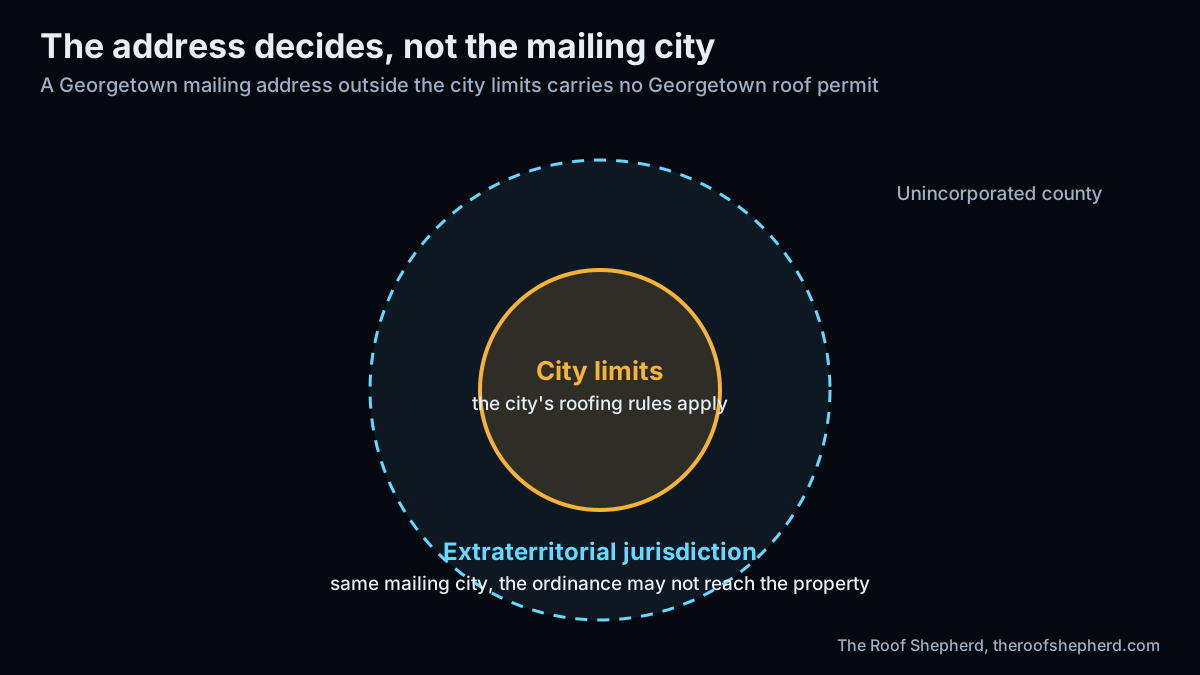
The trap runs both ways: pulling a permit that is not required, and skipping a rule that is. It also moves the sales tax rate, which is a city figure and not a county one; use the Comptroller's address lookup rather than assuming 8.25 percent outside incorporated limits. Leander says the same thing in its own words: in its ETJ only signs and water or wastewater connections need a city permit. For the other cities on this page no source states an ETJ rule, and that is unknown rather than settled in either direction.
The operating consequence is one intake question: is the property inside the city limits? The county appraisal district record answers it, and it should be answered before anyone quotes a permit fee or a schedule.
Georgetown's waste hauling exclusivity also stops at the city limits: inside the ETJ the roll-off market is open, inside the limits it is a live question.
Provenance
How this page was verified, and when it is re-checked
Every cell was read at a primary source on August 28, 2026, and not established means nothing usable was found.
Every cell carries a mark; no mark is upgraded without a source
We only publish what we read at the source. This page publishes only what the company record marks VERIFIED, meaning read at the ordinance, the code section, the city's own page or its fee schedule, on August 28, 2026, with an independent cross-check on August 29 that corrected one of our own answers (Leander does publish an explicit re-roofing exemption; we had read a stale duplicate page). Where two city documents disagree the cell says so and shows both. Where a source was a reproduction rather than the primary text, the table says "source not primary".
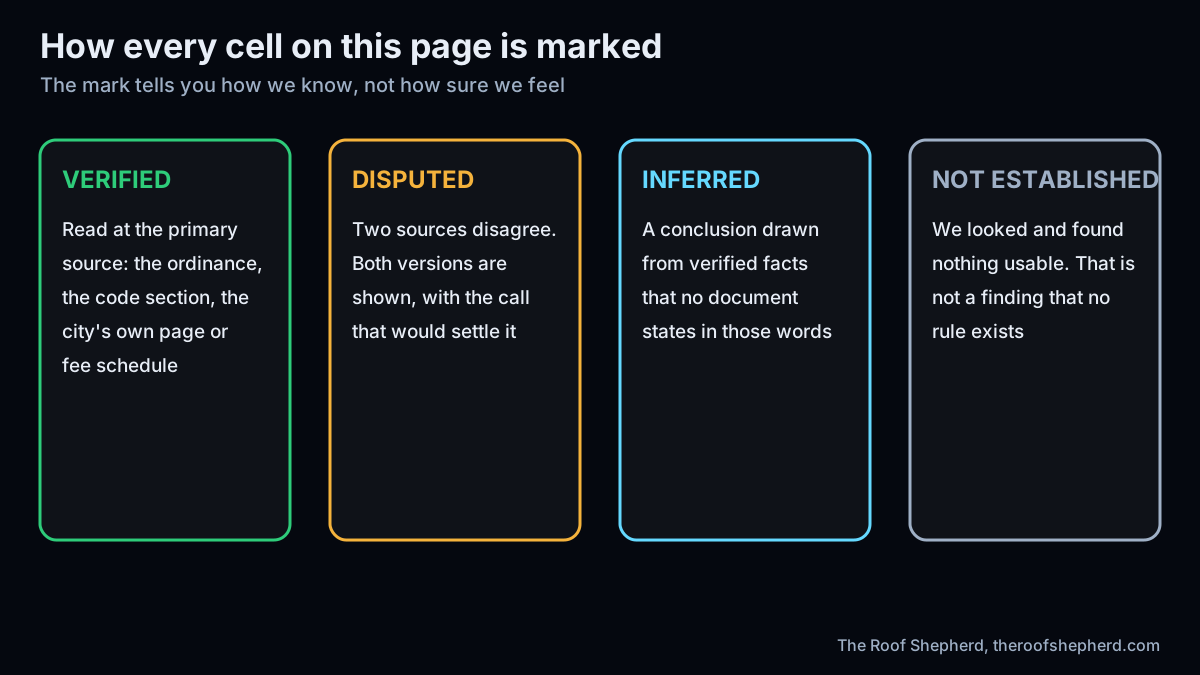
Three questions stay open and can only be closed by a person at the city on the record: whether a roofer in San Marcos needs the Building license or may register as a specialist contractor, whether Cedar Park requires a permit when roof decking is replaced, and what Leander's actual practice is given its page and its ordinance. We do not close open questions by inference, and this page will not either.
Fees change with the fiscal year and cities re-adopt codes on their own schedule, so this page is re-checked at least annually and before the first job in any new city. If a city changes its rule between checks, the city's current document governs, not this page.
When re-checking, open the adopting ordinance and the current fee schedule, not a code summary site or a contractor blog; a second opinion that cites a contractor blog as verified is unusable.
When You Are Ready
When you are ready
Roof Replacement
Here is how we help. We apply for the permit your city requires, build to the code it adopted, and the permit line is shown on your estimate so you can see it was part of the job.
Or call or text 512-575-5052.
Permits & Codes Questions
Common questions about permits & codes
Do I need a permit to replace my roof in Round Rock?
The City of Round Rock says on its building page that it does not require a permit for a residential re-roof, and that is the city's practice. The 2024 IRC the city adopted does not exempt roofing work, so we describe it as the city's guidance rather than a settled exemption. Structural changes need a remodel permit, and commercial flat roofs do need one.
Does Georgetown require a roofing permit?
Yes, inside the city limits: $60, contractor registration before applying, and 10 to 15 business days to process, longer after a hail storm. Outside the city limits Georgetown says roof permits are not required.
Does Austin require a permit for a new roof?
Not for asphalt over asphalt, with two exceptions: homes in the wildland-urban interface replacing half or more of the roof, and any job replacing more than 128 square feet of decking. Austin is on the 2024 IRC with a 105 mph design wind speed, and ice barrier is not required there.
Are roofers licensed in Texas?
No. Texas issues no state roofing license. What exists is city registration in some cities (Georgetown, Cedar Park, Leander, Buda, New Braunfels) and a city license program in San Marcos that does not name roofing. Ask any roofer who says "licensed" who issued it.
Did Texas adopt the 2024 building codes statewide?
No. The September 1, 2026 date that circulated belongs to a licensing rule for air conditioning contractors, adopted effective September 1, 2026. The statewide floor is still the 2012 IRC under Local Government Code 214.212, and each city adopts later editions by ordinance. Round Rock, Austin and Buda are on the 2024 IRC; Georgetown, Cedar Park, Leander, San Marcos, Kyle and New Braunfels are on 2021.
Is ice and water shield required by code in Austin or Georgetown?
Not in the two cities whose adopted Table R301.2 we have read, Austin and Georgetown, which both mark ice barrier as not required. It is a sensible upgrade at valleys and penetrations and many manufacturers call for it there, but it should not be sold to you as code.
Keep Learning
Where to go from here
Each guide below picks up a thread from this page: what the layers cost, what storms do to them, and how to hire the person who touches them.