
Learning Center · Storm and Insurance
Roof Age, Actual Cash Value and Percentage Deductibles: What They Do to a Texas Roof Claim
Three things on your declarations page decide more about a roof claim than the storm does: how the policy values the roof, how the deductible is written, and which endorsements are attached. This guide explains each one with the state’s own examples and the words from a Texas policy form.
Updated October 12, 2026
Read This First
The short version
- There are two ways a roof is paid. Replacement cost coverage pays to replace the roof at today’s prices; actual cash value pays replacement cost minus depreciation for age and wear.
- Some Texas carriers switch a roof to actual cash value as it ages, and TDI says the company should tell you when coverage changes.
- A replacement cost claim usually arrives in two payments; the withheld depreciation is paid after the repairs are done and proven.
- A percentage wind and hail deductible is a share of your dwelling coverage, not of the claim: 1 percent of $400,000 is $4,000 and 2 percent is $8,000.
- A cosmetic damage exclusion removes coverage for hail marks that do not let water through or shorten the roof’s life.
To have your roof documented before or after a claim, start with Get Help or call or text 512-575-5052.
Short version: 3 min. Full page: 11 min. Want the detail? Each section below opens with a tap, or switch to Full at the top to open them all.
Direct Answer
How does roof age affect an insurance claim in Texas?
Age drives the depreciation you lose under ACV and get back under RCV, and the deductible comes off first.
The short answer
Age changes the check. It matters because some Texas policies pay an older roof at actual cash value, which is replacement cost minus depreciation for age and wear. A replacement cost policy pays the depreciation back after the work is done. A percentage wind and hail deductible, often 1 or 2 percent of your dwelling coverage, comes off first.
Where to look
The declarations page answers most of this. TDI’s home insurance guide says the first page of your policy is the declarations page, with a summary of your coverages, dollar limits and deductibles. Look for the words actual cash value or replacement cost next to the dwelling or the roof, the windstorm or wind and hail deductible, and any roof endorsement listed by form number.
Valuation
RCV vs ACV: how your insurer values an aging roof
Replacement cost pays today's price; actual cash value keeps the depreciation, and some carriers move older roofs to it.
The two definitions
TDI puts it simply. Replacement cost coverage pays to repair or replace your house at current prices. Actual cash value coverage pays replacement cost minus depreciation, and depreciation is a decrease in value because of wear and age. The Texas FAIR Plan policy form defines actual cash value as the cost to repair or replace with material of like kind and quality, subject to a deduction for deterioration and depreciation, and warns in the policy itself that it may be significantly less than replacement cost.
TDI’s own roof example
TDI works the math on a roof. You bought a new roof 10 years ago and a new one costs $10,000 today. With replacement cost coverage and a $2,000 deductible, the company pays $8,000. With actual cash value, the roof might be valued at $7,000, and after the same $2,000 deductible the company pays $5,000, with the rest on you. Those are TDI’s figures for illustration, not a quote on any roof.
Roofs get moved to ACV
Watch the renewal. TDI’s roof page says that as roofs age, some companies will switch to actual cash value, that a roof in poor condition might not be covered at all, and that your company should tell you when it changes your coverage. The Office of Public Insurance Counsel adds that even on a policy that pays replacement cost, some property may be paid only at actual cash value, and roofs are first on its list. If your roof is 10 to 15 years old, read the renewal packet for a roof schedule or a roof endorsement.
Recoverable Depreciation
What recoverable depreciation means, and how you collect it
Under RCV the first check holds back depreciation; the second check arrives after you complete and prove the repairs.
Two checks
A replacement cost claim comes in two parts. TDI’s claim steps say the first payment is the estimated repair cost minus depreciation, and the second comes after the repairs are done. Its roof page says the same: the first check is a partial payment and the rest follows once you have started repairs. OPIC notes that most companies pay only part of the replacement cost first, and you have to prove you repaired or replaced the property before you get the rest.
OPIC’s example
OPIC’s shopping guide runs the same numbers with a 50 percent depreciation on a 10 year old roof and a $10,000 replacement. With replacement cost coverage and a $2,000 deductible, you pay $2,000 and the company pays $8,000, usually as actual cash value first and the rest after proof of completion. With actual cash value coverage, you pay $7,000 and the company pays $3,000, and the difference, the depreciation, is not recoverable.
What proof looks like
Collecting the holdback takes paper. TDI says the second payment comes after the repairs are done, and OPIC says you have to prove the repair or replacement is complete. The roofer’s final invoice and photos of the finished roof are the usual proof; ask your adjuster what the company wants. TDI also says the company can ask for proof you paid the deductible, such as a canceled check or a copy of a payment plan. If the holdback is never claimed, it is never paid. Our hail damage and insurance guide walks the whole claim timeline, including the deadlines the carrier has to meet.
Deductibles
How a percentage wind and hail deductible works
It is a share of the insured value of the home, not of the claim, and it applies to each windstorm or hail loss.
The math, in OPIC’s words
Percentage deductibles are calculated on the home, not the claim. OPIC explains that a percentage deductible is a percentage of your home’s insured value: on a home insured for $100,000, a 1 percent deductible means you are responsible for $1,000 of any loss and a 2 percent deductible means $2,000. It also points out that the dollar amount rises every time the insured value goes up at renewal. On a home insured for $400,000, 1 percent is $4,000 and 2 percent is $8,000, before the claim is even valued.
Two deductibles on one policy
Most Texas policies carry two. OPIC says a typical Texas homeowners policy has a Clause 1 deductible for windstorm claims and a Clause 2 deductible for everything else, and the Texas FAIR Plan form applies its Clause 1 amount to each loss that results from windstorm or hail. TDI’s roof page says to ask your agent whether the wind and hail deductible is different from the deductible for other damage, because if it is, you might pay more out of pocket when a storm damages the roof.
When the deductible is bigger than the repair
A high percentage can swallow a small claim. TDI’s deductibles page gives the example of a home insured for $150,000 with a 5 percent deductible, or $7,500: if the hail repairs cost $6,500, the policy pays nothing because the repairs cost less than the deductible. The direction in the market is upward. The Texas FAIR Plan, the state’s residual market insurer for homeowners who cannot find coverage elsewhere, eliminated its 1 percent wind and hail option effective July 1, 2026, moving those policies to 2 percent at renewal and offering 2 to 5 percent.
The deductible is yours to pay
No contractor can make it go away. Texas Business and Commerce Code 27.02 makes it an offense for a seller who expects to be paid from insurance proceeds to pay, waive, absorb, rebate or credit the deductible, or to assist the insured in avoiding it in any other manner, and requires a bold notice on any such contract of $1,000 or more. TDI says plainly that it is illegal and that your company can ask for proof you paid it. We never waive, absorb or discount a deductible.
Endorsements
What a cosmetic damage exclusion takes away
It removes coverage for hail marks that change the look of the roof but do not let water in or shorten its life.
The policy words
The exclusion is specific. The Texas Windstorm Insurance Association’s Form 420, filed with TDI, reads: “We do not cover cosmetic loss or damage to roof coverings caused by the peril of hail.” It defines cosmetic loss as damage that alters the physical appearance of the roof covering but does not allow water to penetrate and does not cause the roof covering to fail at its intended function of keeping out the elements over an extended period of time. Other carriers’ endorsements use their own wording, so read the one attached to your policy.
Why it matters most on metal
Dents are the test case. Hail can dent a metal panel without opening it, and under an exclusion like this a dented but watertight panel may not be covered at all. On an asphalt roof the question becomes whether a hail mark fractured the mat, which is a documented finding, not a guess. That is why our claim documentation inspection records each test square with photos the same way whether or not an exclusion is in play.
The trade behind the credit
Read the notice too. The TWIA form carries a notice that the endorsement may be attached only to policies receiving a credit for impact resistant roof coverings. That is the trade: a lower premium in exchange for giving up coverage for cosmetic hail damage. Before choosing a roof for a discount, ask your own carrier in writing what the credit is and whether an exclusion comes with it.
No Promises
How much will insurance pay for a roof?
It depends on your valuation, deductible, endorsements and what the carrier finds; nobody can promise the number.
The honest answer
Nobody can tell you the number before the carrier does. The amount depends on whether your roof is valued at replacement cost or actual cash value, on the size of your wind and hail deductible, on any cosmetic or roof schedule endorsement, and on what the adjuster finds and the company approves. TDI’s roof page is blunt that an insurer will not pay for a new roof because it is old or worn out. A documented roof, before and after the storm, is the one part of that equation you control.
Our role
Here is our role. We advise and educate you on your options and rights, document the roof, and submit documented supplements. We are not a public adjuster and never negotiate or settle a claim for you. We never waive, absorb or discount a deductible. Texas Insurance Code 4102.163 bars a contractor from acting as a public adjuster on property it may work on. What we can do is give you a record that shows what is on the roof, and our storm damage guide shows what to capture yourself in the first 72 hours.
When You Are Ready
When you are ready
Insurance Documentation
Here is how we help. We read the roof schedule and deductible on your declarations page with you. We advise and educate you on your options and rights, document the roof, and submit documented supplements. We are not a public adjuster and never negotiate or settle a claim for you.
Or call or text 512-575-5052.
Field Photos
On the job
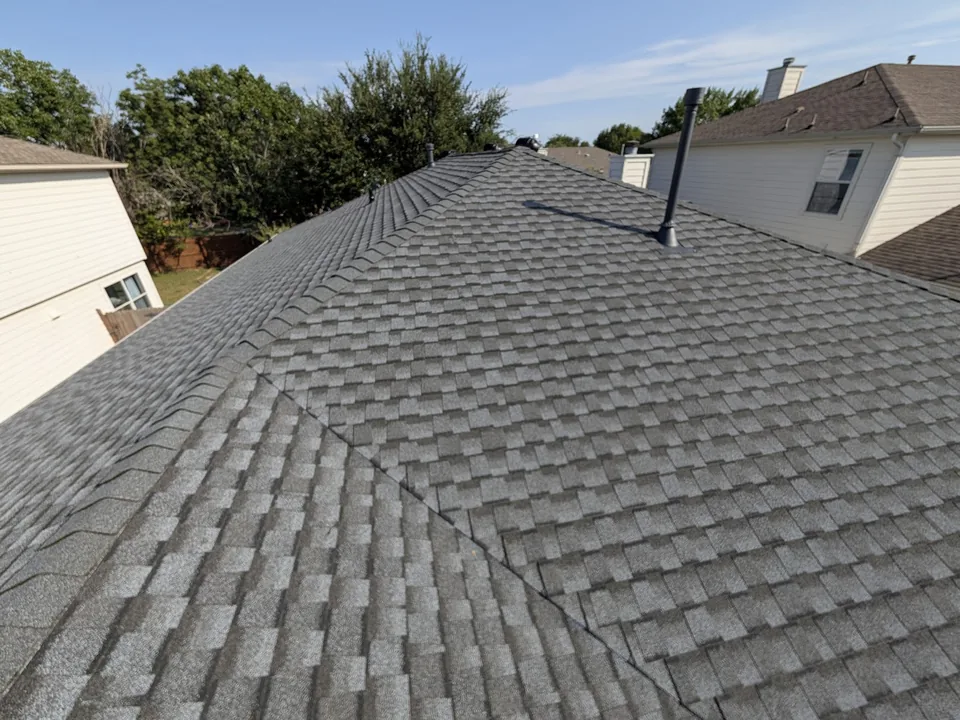
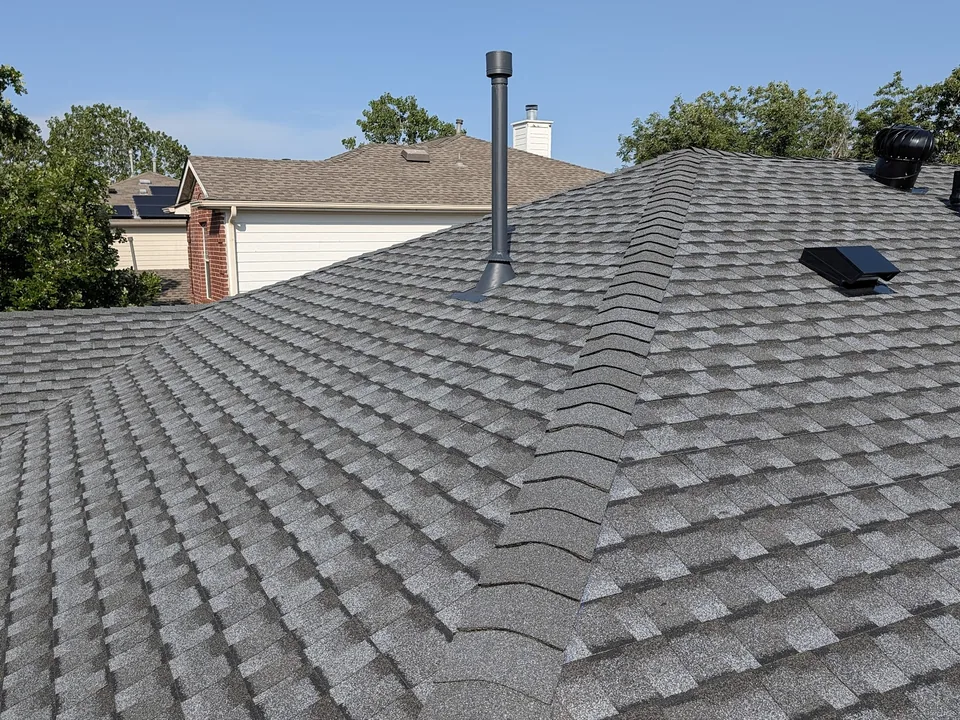
Photos from roofs we have worked on. Select one to enlarge it.
Common Questions
Questions homeowners ask
What is the difference between RCV and ACV on a roof?
Replacement cost value pays to replace the roof at today’s prices, usually in two payments with depreciation held back until the work is done. Actual cash value pays replacement cost minus depreciation for age and wear, permanently. TDI’s example: a $10,000 roof, 10 years old, pays $8,000 under RCV and $5,000 under ACV after a $2,000 deductible.
Can my insurance company change my roof to actual cash value?
Yes, at renewal. TDI says that as roofs age some companies switch to actual cash value and that the company should tell you when it changes your coverage. Read the renewal packet for a roof schedule or endorsement, and ask your agent if replacement cost is still available.
What is recoverable depreciation?
The part of a replacement cost claim the carrier holds back until you finish the repairs and prove it. TDI and OPIC both describe the two payment process. If you never complete the work or never send the proof, the holdback is not paid.
How is a 2 percent wind and hail deductible calculated?
As 2 percent of the insured value of the home, not of the claim. OPIC’s example is $2,000 on a home insured for $100,000. On a $400,000 home it is $8,000, and it goes up when the insured value goes up at renewal.
What is a cosmetic damage exclusion on a roof?
An endorsement that removes coverage for hail damage that changes how the roof looks but does not let water in or shorten its life. TWIA’s Form 420 is one example filed with TDI; other carriers write their own. It matters most on metal roofs, where hail dents without opening the panel.
Can a roofer pay my deductible or give me a credit for it?
No. Texas Business and Commerce Code 27.02 makes paying, waiving, absorbing, rebating or crediting a deductible an offense, and TDI says the company can ask you for proof you paid it. We never waive, absorb or discount a deductible.
Keep Learning