
Learning Center · Roofing
Roof Replacement Day: What to Expect
Most roof replacements are over in a day, and the day goes better when the homeowner knows the order of events. This guide walks through what happens from the material drop to the magnet sweep, what you do beforehand, and what gets checked before anyone calls the job done.
Updated October 12, 2026
Read This First
The short version
- A typical single-story home around Round Rock is torn off and reroofed in one working day. Two-story, steep or cut-up roofs can take two.
- Before the crew arrives: move cars, clear the driveway for the dumpster, take fragile items off the walls, and cover anything stored in the attic.
- The crew tarps landscaping, drops the old roof into the dumpster, repairs bad decking, installs the new system to the maker’s nailing pattern, then runs a rolling magnet for nails.
- Whether a permit, a permit card and a final city inspection apply depends on your city. Georgetown requires them. Round Rock says it does not for a residential re-roof, so confirm with the city.
To schedule a replacement and get the prep list for your house, start with Get Help or call or text 512-575-5052.
Short version: 3 min. Full page: 9 min. Want the detail? Each section below opens with a tap, or switch to Full at the top to open them all.
Direct Answer
How long does a roof replacement take?
Usually one day for a single-story home, two for a large, steep or two-story roof, plus the delivery the day before.
One day is the norm
A roof is replaced faster than most people expect. On the single-story homes we replace around Round Rock, Pflugerville and Georgetown, the crew tears off, repairs decking, dries in and finishes a 25 to 35 square roof in one working day. A two-story house, a steep roof or one with many hips and valleys can take two.
The order of events
The day follows the same sequence every time: materials arrive the day before, the dumpster is placed, the yard and walls are protected, the old roof comes off, the decking is inspected and repaired, the underlayment and flashings go on, the shingles are nailed to the manufacturer’s pattern, the ridge is capped, and the cleanup and magnet sweep close it out. The rest of this guide takes each step in turn.
Preparation
What the homeowner does before replacement day
Move cars, clear the driveway, cover attic storage, take pictures off the walls, and plan for pets and kids.
Outside
Make room. The dumpster and the material delivery both need the driveway, so cars go on the street the night before. Move patio furniture, grills, potted plants and anything under the eaves, because tear-off debris falls along the whole roof edge. Mark sprinkler heads and any plants you care about so the crew tarps them. Unlock the gate so the crew can reach every side of the house.
Inside
The house will shake. Thousands of hammer blows and the tear-off bars travel through the framing, so take pictures and mirrors off the walls and fragile items off high shelves. In the attic, decking repairs send dust and old nails down, so cover stored belongings with plastic or move them. Plan for pets and small children: the noise lasts all day and the yard will have nails in it until the sweep.
Paperwork
Know what is on the contract. The shingle, the color, the underlayment, the number of decking sheets included, the ventilation plan and the warranty terms should all be on the signed document before the first bundle arrives. Our guide to reading a roofing estimate explains each line.
The Site
Dumpster placement and protecting the yard, walls and attic
Dumpster on boards in the driveway, tarps over plants and walls, attic covered before the first shingle comes off.
Landscaping and walls
Protection goes up first. Tarps are hung from the eaves over beds, shrubs and AC units so torn shingles slide onto the tarp and not into the plants. Plywood or tarps cover the deck and patio. Siding, windows and gutters along the drop zone get watched because a bundle wrapper or a dropped tear-off bar can mark them. Walk the yard with the crew lead before tear-off starts so the plants you care about are named.
The dumpster
The dumpster is parked where it does the least harm. On most homes that is the driveway, set on boards so the steel does not score the concrete. Ask where it will go before the order is placed; a dumpster in the street can require city permission in some places, and a driveway that cannot carry the weight needs a different plan. It arrives before the crew and leaves within a day or two of the finish.
The attic
Debris comes through the deck. Every nail pulled through the decking, every rotten sheet cut out, drops dust and splinters into the attic below. Covering stored items and, where the ceiling is open, the insulation under the work area is the homeowner’s job the night before, and a quick look in the attic after the job is finished is worth the ladder.
Tear-Off to Ridge
Tear-off, decking, underlayment and the nailing that earns the warranty
Everything comes off to the wood, bad decking is replaced, then the new system goes on to the maker’s instructions.
Tear-off and decking
The old roof comes off to bare decking. Layers, felt, old flashing and the nails all go, which is the only way to see the wood. Soft, delaminated or rotten decking is cut out and replaced with new sheets; the contract states how many sheets are included and the per-sheet price beyond that, so a decking surprise is a known number rather than an argument. Our roofing system anatomy guide shows each layer that goes back on.
Nail count and starter
The nailing pattern is where a warranty is earned or lost. GAF’s warranty document pays its higher wind coverage only with what it calls special installation: GAF starter strip at the eaves and rakes and six nails per shingle, or four nails on its LayerLock-labeled shingles. The same document excludes damage caused by fastening that does not follow the printed instructions. A good crew lead counts nails on the first course and checks the starter at the rakes, and you are welcome to ask what the count is on your roof.
Drying in
The roof is never left open. Underlayment goes on as each slope is cleared, so an afternoon shower lands on a covered deck. Flashings at walls, chimneys and pipes are replaced rather than reused. The shingles follow, the ridge vent or caps finish the peak, and the crew lead walks every slope before the ladders come down.
Closing Out
Cleanup, the magnet sweep and the final walk
Tarps come down, the yard is raked, a magnet sweeps for nails, and the crew lead walks the roof and yard with you.
The magnet sweep
Nails are the thing homeowners fear, and the sweep is the answer. A rolling magnet is pushed over the driveway, the lawn, the beds and the street in front of the house, then run again the next morning after the dumpster leaves, because the truck often shakes loose a few more. Gutters are cleared of tear-off debris, which otherwise washes to the downspouts in the first rain. If you find a nail a week later, call; a second sweep costs nothing to ask for.
The walkthrough
The job is finished when you have seen it. The crew lead shows you the roof from the ground and from the ladder if you want it, the flashing details, the ventilation, and any decking that was replaced, and you keep the photographs. The invoice, the product names, the installation date and the written workmanship warranty go into your house file, because they are what a manufacturer or a future buyer will ask for. Our roof replacement service page explains what we hand over at the end of every job.
City Rules
Permit card and final inspection, where the city requires them
Georgetown requires a re-roof permit, Round Rock says it does not, and your own city decides.
It depends on the city
Permit rules are set by each city. The City of Georgetown’s building permits page says permits are required for work ranging from new construction, remodeling, repair and additions to new roofs. Round Rock’s own page and the code it adopted disagree on whether a residential re-roof needs a permit, so confirm with the city before work starts; the page does say a permit is needed if the roof is being modified, and that drip edge is required. Where a permit is pulled, the permit card is posted where the inspector can see it, and the city’s final inspection is scheduled after the roof is done; the job is closed when the city signs off, not before. Our roof permits and codes guide has the city by city table, and the address decides which rules apply.
What the inspector looks at
A final roof inspection, where a city requires one, is short. In our experience the inspector confirms the permit matches the work, looks at drip edge, flashing, underlayment at the edges and ventilation, and checks that the roof covering is installed to the adopted code and the manufacturer’s instructions. Keep the permit card and the signed-off inspection with the invoice; a buyer’s inspector may ask for them years later.
When You Are Ready
When you are ready
Roof Replacement
Here is how we help. On replacement day our crew does the sequence on this page: tear-off, decking check, underlayment, shingles, cleanup with a magnet sweep, and a photo record of each step that is yours when the truck leaves.
Or call or text 512-575-5052.
Field Photos
On the job
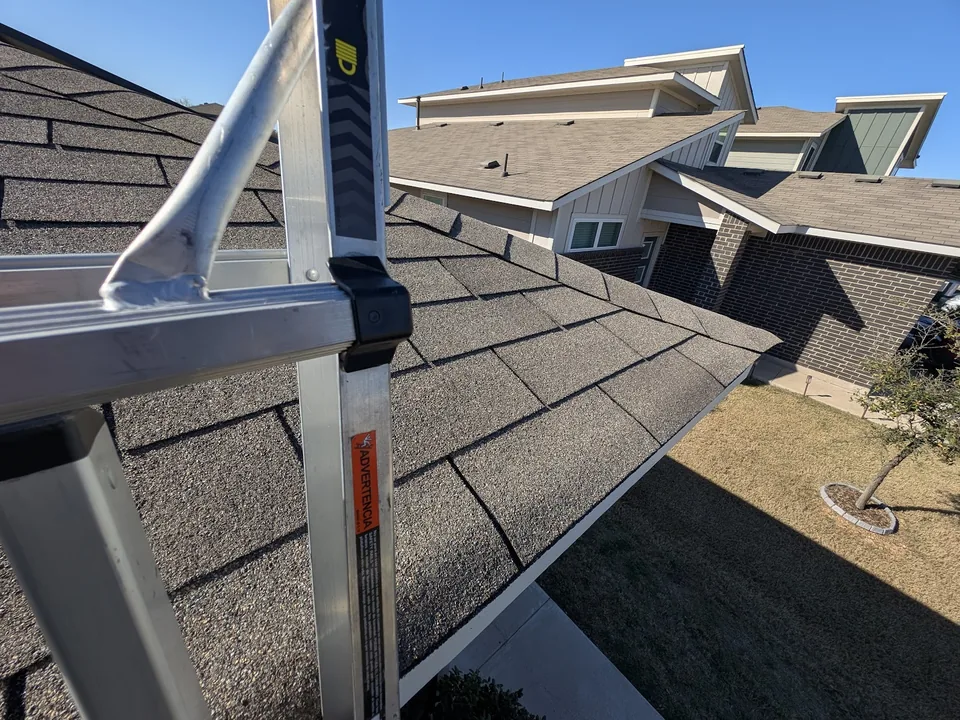
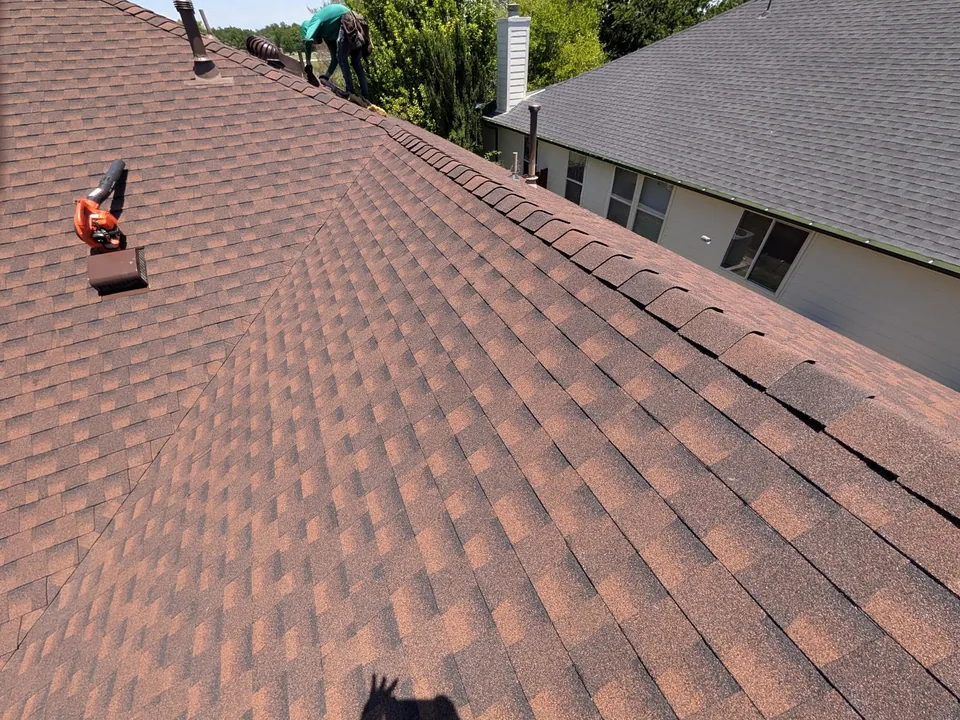
Photos from roofs we have worked on. Select one to enlarge it.
Common Questions
Questions homeowners ask
How long does it take to replace a roof?
Usually one working day for a single-story home with a 25 to 35 square roof. Two-story homes, roofs steeper than 7/12 and roofs with many hips, valleys and dormers can take two days. Materials are delivered the day before.
Do I need to be home during the roof replacement?
No, but it helps to be there at the start to walk the yard with the crew lead and at the end for the walkthrough. Leave the gate unlocked and the driveway clear if you will be away.
Where does the dumpster go?
On the driveway, on boards to protect the concrete, in most cases. Ask before the order is placed; a dumpster in the street can require city permission in some places, and a weak driveway needs a different plan.
How do you make sure there are no nails left in my yard?
A rolling magnet is run over the driveway, lawn, beds and street at the end of the job and again after the dumpster leaves. If you find a nail later, call and the sweep is repeated.
Does a roof replacement need a permit in Texas?
It depends on the city. Georgetown requires a permit for a new roof. In Round Rock the city’s page and its adopted code disagree, so confirm with the city. Our permits and codes guide lists the cities around Round Rock, Dallas and Houston, and the property address decides.
What should I do with my attic before the roof is replaced?
Cover or move anything stored there. Pulling the old nails and replacing decking drops dust, splinters and nails into the attic, and a look inside after the job is worth the ladder.
Keep Learning