
Learning Center · Roofing
Roof Warranties Explained: Manufacturer vs Workmanship
A new roof comes with two warranties, and most homeowners only ever read the brochure version of one. This guide explains both in plain words, using the actual warranty documents from GAF, Owens Corning and CertainTeed, so you know what is covered, for how long, and what can cancel it.
Updated October 12, 2026
Read This First
The short version
- The manufacturer warranty covers defects in the shingles. The workmanship warranty covers how they were installed. They are two documents from two companies.
- All three big shingle makers give a non-prorated period of 10 years on their lifetime shingles for a homeowner-occupied house. After that, labor drops off and the payout shrinks every year.
- Each warranty can be transferred once. GAF gives the buyer one year to notify them, Owens Corning gives 60 days, and a transfer after the non-prorated period cuts coverage to two years.
- All three exclude hail, wind over the rated speed, poor ventilation and bad installation. The upgraded warranties that add workmanship cover need an installer the maker has approved.
To have your roof and its paperwork looked at, start with Get Help or call or text 512-575-5052.
Short version: 3 min. Full page: 10 min. Want the detail? Each section below opens with a tap, or switch to Full at the top to open them all.
Direct Answer
What does a roof warranty cover?
The maker covers shingle defects and the installer covers the installation, but neither covers hail.
Two warranties, two companies
A roof warranty is two documents. The manufacturer’s limited warranty covers manufacturing defects in the shingles. The workmanship warranty comes from the installer and covers installation mistakes such as bad flashing or misplaced nails. Neither covers storms: GAF, Owens Corning and CertainTeed all exclude hail and wind above the rated speed in the documents cited on this page.
Why the two get confused
The brochure says Lifetime and the homeowner hears forever. The document behind it says Lifetime means as long as the original owner owns the home, that labor is paid only during the early non-prorated years, and that a leak caused by a flashing mistake is the installer’s problem, not the shingle maker’s. Reading the actual warranty once, before you sign, prevents most of the disappointment that shows up at claim time.
Shingle Warranty Explained
What a non-prorated warranty means
For 10 years the maker pays material and labor on a defect; after that, labor stops and the payout shrinks with time.
The early years pay in full
Non-prorated means the manufacturer pays the full cost of fixing a defect, including labor, during a set period. GAF calls it the Smart Choice Protection Period, Owens Corning calls it the TRU PROtection period and CertainTeed calls it SureStart. On each company’s lifetime shingles, installed on a single-family home the owner lives in, that period is 10 years. GAF gives 40 years on buildings not owned by individuals (a company, government or association); Owens Corning gives 40 years where the owner does not live in the home, with a 5 year non-prorated period; CertainTeed gives 40 or 50 years, depending on the shingle, under its Other Ownership terms.
Then the proration math starts
Prorated means the payout shrinks with age. After year 10, GAF covers replacement shingles only, no labor, reduced by months used divided by 600 for years 11 through 40, then a flat 20 percent from year 41 on. GAF’s own example: a claim at 25 years is reduced by 300 over 600, so GAF pays half the material. Owens Corning starts year 11 at 80 percent of material cost and drops 2 percent a year to year 40. CertainTeed uses a reduction of 1 over 600 per month and holds at 20 percent after year 40. Tear-off, disposal, flashing and metal work are not covered by any of the three after the non-prorated period.
What Lifetime actually means
Lifetime is a defined term. GAF: as long as the original owner, or a properly transferred second owner, owns the property, and only on a single-family detached home owned by individuals. Owens Corning and CertainTeed define it the same way, for individual owners living in the home. Sell the house and the clock changes, which is the next section.
Selling the House
Does a roof warranty transfer to a new owner?
Once, if the buyer tells the maker in time; after the non-prorated years a transfer keeps only two years.
One transfer, with a deadline
All three warranties transfer exactly once, to the first subsequent owner. The deadline belongs to the buyer. GAF requires written notice within one year after the property transfer. Owens Corning requires the second owner to contact them within 60 days of the real estate transfer with proof of purchase, the installation date and the ownership history. CertainTeed treats a bank foreclosure or a change of name on the deed as a transfer, so the clock can start without a sale.
When the transfer happens matters
Timing changes what the buyer gets. If the home sells inside the non-prorated period, the buyer steps into the same coverage the original owner had (CertainTeed caps the transferred lifetime term at 40 or 50 years depending on the shingle). If it sells after that period, GAF, Owens Corning and CertainTeed all cut the remaining warranty to two years from the ownership change, and the payout is material only, reduced for age.
What to hand a buyer
Keep the paperwork together. The buyer needs the installation date, the contractor’s invoice naming the shingle, the warranty document in force when the roof went on, and the workmanship warranty from the installer. Our guide to reading a roofing estimate shows where the product and warranty lines belong on the contract so they are there when you need them.
Registration and Installer Status
Standard, system and enhanced warranties, and who can offer them
The basic warranty needs no sign-up, but tiers that add workmanship cover need an installer the maker approved.
The standard warranty comes in the bundle
You do not have to register anything for the base coverage. GAF’s warranty page lists no contractor requirement for its Shingle and Accessory Limited Warranty, and the document itself asks only that you keep it with your records and give notice within 30 days of noticing a problem. Owens Corning and CertainTeed work the same way: the warranty follows the shingle, and your proof is the invoice and the installation date.
The enhanced tiers are installer-gated
The stronger tiers are different. GAF’s System Plus, Silver Pledge and Golden Pledge warranties require three, four or five qualifying GAF accessories and installation by a contractor holding GAF Certified, Certified Plus or Master Elite status, and only the Silver Pledge and Golden Pledge tiers add workmanship coverage, for a length that depends on the tier and the shingle. GAF Energy’s solar roof tiers add the line “Limited Warranty must be registered by GAF certified contractor.” Ask any roofer which tier is on the quote and whether they hold the status it requires. The Roof Shepherd states its own workmanship warranty in writing with the contract and does not claim a manufacturer credential it does not hold.
The accessory count is real
The system tiers count parts. GAF’s Roofing System Limited Warranty requires at least three qualifying GAF accessories (starter, ridge cap, leak barrier, roof deck protection, ventilation or seam tape) with lifetime shingles. Owens Corning’s standard warranty likewise extends component coverage when three qualifying Owens Corning components are installed. A roof built from mixed brands still carries the shingle warranty, but not the system version.
Exclusions
What voids a roof warranty
Hail, wind past the rating, bad ventilation, improper installation and repairs made before the claim is reviewed.
Storms are not defects
Hail is excluded by name. GAF lists hail, fire and winds over the rated speed under acts of nature. Owens Corning lists hail, strong storms and ice damming above the leak barrier. CertainTeed lists hailstorm, lightning, earthquake, fire, flood and falling objects. Storm damage is an insurance question, covered in our hail damage insurance guide, not a warranty question.
Ventilation is a condition of coverage
A hot, unvented attic cooks shingles from below, and the makers know it. GAF excludes damage from inadequate ventilation. Owens Corning excludes damage caused by improper or inadequate roof ventilation, unvented attics and enclosed rafter assemblies. CertainTeed goes further: shingles on an inadequately ventilated deck get a reduced 10-year warranty and no SureStart protection at all. See our attic ventilation guide for the intake and exhaust rule that keeps this coverage alive.
Installation and wind ratings
Installation mistakes shift the bill to the installer. All three exclude damage caused by fastening or application that does not follow the printed instructions. Wind coverage is conditional too: GAF’s higher wind speed applies only with its special installation, which means GAF starter strips at eaves and rakes and six nails per shingle (four for LayerLock-labeled shingles). A roofer who sells the higher wind rating and nails four is selling a warranty the roof does not have.
Fixing it first can cost the claim
Call the maker before anyone touches the roof. GAF and Owens Corning both say a claim may be denied if you repair or replace the products before notifying them or before their evaluation is complete. GAF adds that notice to your contractor, dealer or builder is not notice to GAF. Photograph the problem, call the warranty line, then schedule the repair.
The Installer’s Side
The workmanship warranty, and why it is the one you use
Most leaks in the first years trace to flashing and fastening, which only the installer’s warranty covers.
What it covers
The workmanship warranty is the installer’s promise about the work. It covers leaks and failures caused by how the roof was put on: flashing, nail placement, starter, valleys, pipe boots, the parts the shingle maker lists as not covered. Its length and terms are set by the contractor, so they belong in writing on the contract, stated separately from the manufacturer warranty with their own duration. On the roofs we replace, the written workmanship warranty is part of the agreement, and our roof replacement service page explains how the two warranties fit together.
Questions to ask before you sign
Three questions settle it. How many years is the workmanship warranty, and is it in the contract? Which manufacturer warranty tier is on this quote, and does the company hold the installer status that tier requires? Does the install earn the wind rating on the brochure, with the starter and nail count the maker specifies? Our guide to choosing a roofing contractor walks through the rest of the paperwork check.
When You Are Ready
When you are ready
Residential Roofing
Here is how we help. Every residential roof we install comes with the manufacturer’s limited warranty, which takes effect on installation (keep the invoice and the install date), and our written workmanship warranty, stated separately with its own terms.
Or call or text 512-575-5052.
Field Photos
On the job
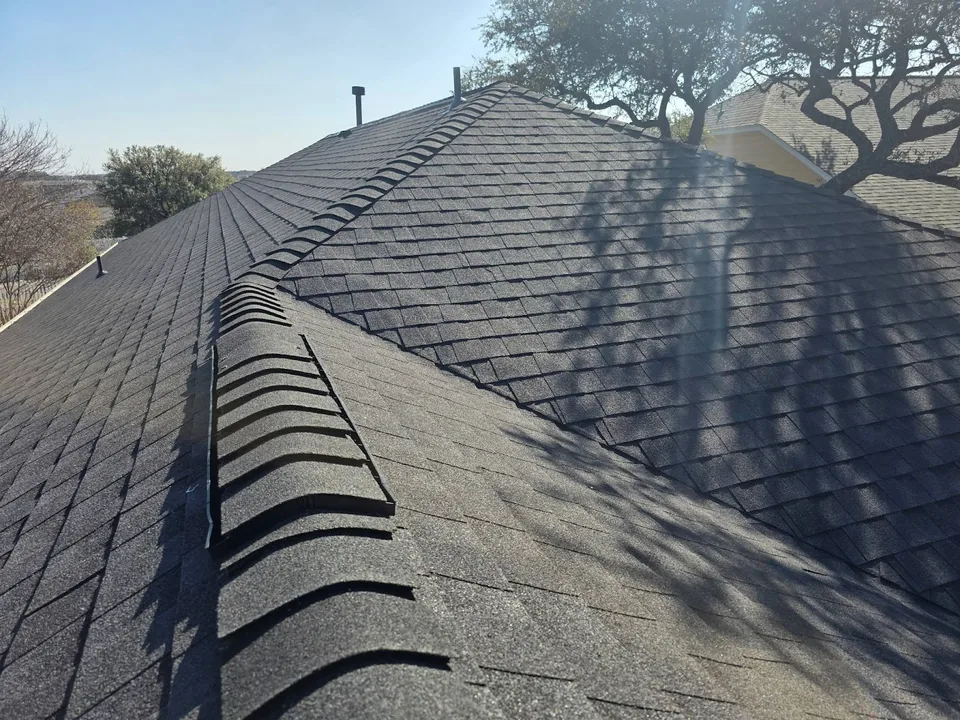
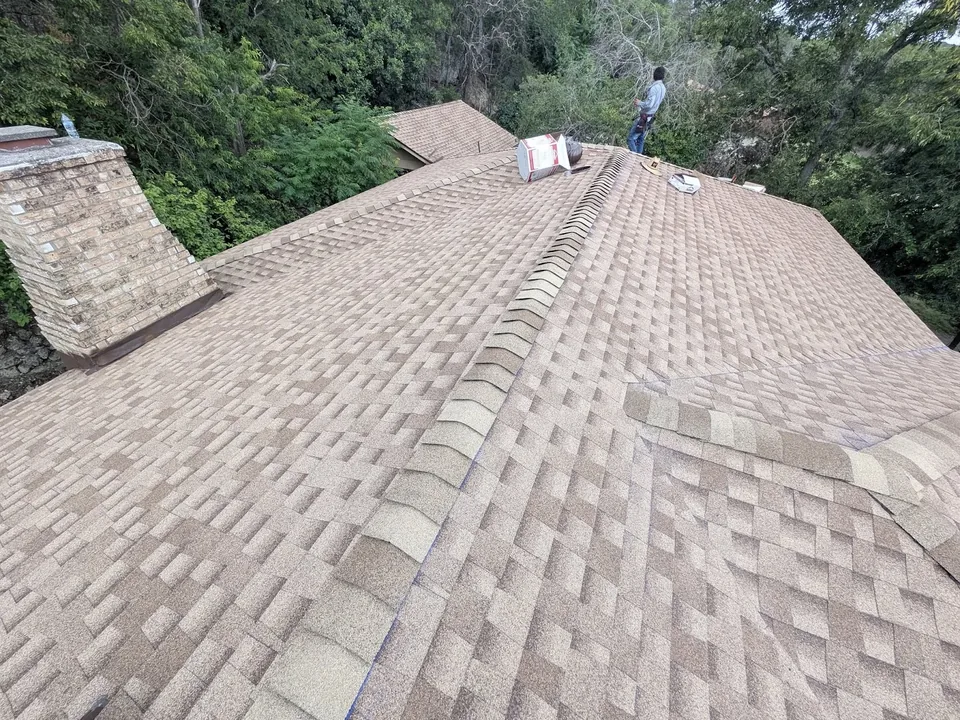
Photos from roofs we have worked on. Select one to enlarge it.
Common Questions
Questions homeowners ask
What is the difference between a manufacturer warranty and a workmanship warranty?
The manufacturer warranty covers manufacturing defects in the shingles and comes from GAF, Owens Corning, CertainTeed or whoever made them. The workmanship warranty covers installation errors and comes from the roofing contractor. Each has its own term. Hail and wind damage are excluded from both, and belong to your insurance policy.
What does non-prorated warranty mean?
Non-prorated means the manufacturer pays the full cost of the defect, including labor, during an early protection period. On lifetime shingles from GAF, Owens Corning and CertainTeed that period is 10 years for a homeowner living in a single-family house. After it ends, labor is no longer covered and the material payout is reduced by the age of the roof.
Is a roof warranty transferable to a new owner?
Yes, once. The new owner has to notify the manufacturer: within one year for GAF, within 60 days for Owens Corning. A transfer inside the non-prorated period keeps the same coverage. A transfer after it reduces the remaining warranty to two years from the ownership change.
Does a roof warranty cover hail damage?
No. GAF, Owens Corning and CertainTeed each list hail as an excluded cause. Hail damage is a question for your homeowners policy, and our hail damage insurance guide explains how that process works.
Do I need to register my roof warranty?
The standard shingle warranties from the three makers cited here take effect without registration; keep your invoice and the installation date. The enhanced tiers that add workmanship coverage require installation by a contractor holding that manufacturer’s credential, and some are registered by the contractor.
Does my attic ventilation affect the warranty?
Yes. All three makers exclude damage caused by inadequate ventilation, and CertainTeed reduces the warranty to 10 years with no SureStart protection on an inadequately ventilated deck. A balanced intake and exhaust system protects both the shingles and the coverage.
Keep Learning