
Learning Center · Storm and Insurance
Roof Leak First Steps: What to Do in the First Hour
A roof leak is a water problem before it is a roof problem. The first hour is about keeping water off your floors, finding where it is getting in, and making a record before anything is cleaned up or covered. This guide gives those steps in order, with what a Texas policy expects of you.
Updated October 12, 2026
Read This First
The short version
- Protect the room first: move belongings, catch the water, and dry wet material within 24 to 48 hours so mold does not get a start.
- Find the source by looking uphill on the roof from the stain, at the nearest pipe, wall, chimney or valley, not straight above the drip.
- The Texas FAIR Plan form, like most policies, requires reasonable repairs to protect the property and pays their reasonable cost; read your own policy’s duties after loss. Permanent repairs wait for the inspection.
- Photograph the ceiling, the attic and the roof from the ground before cleanup, keep every receipt, and never climb on a wet roof.
If the leak is active right now, call or text 512-575-5052, or start with Get Help.
Short version: 3 min. Full page: 9 min. Want the detail? Each section below opens with a tap, or switch to Full at the top to open them all.
Direct Answer
What should you do first when your roof is leaking?
Protect the room, find the source safely, make only temporary repairs, photograph before cleanup, stay off a wet roof.
The short answer
When a roof leaks, protect the room first: move belongings, set a bucket, and catch the water. Then find the source from inside the attic if you can reach it safely. Make only temporary repairs, photograph everything before cleanup, keep receipts, and stay off a wet roof. Permanent repairs wait until the leak is understood.
Why the order matters
Each step protects the next. Catching the water limits the damage. Finding the source keeps a temporary fix in the right place. Photos taken before cleanup are the only record of what the water did. And a permanent repair made before anyone has seen the damage can cost you the claim, as the Texas Department of Insurance warns in its home insurance guide.
Step One
Protect the room before you touch the roof
Catch the water, move what it can ruin, and get wet material drying within 24 to 48 hours.
Catch it and clear it
Start with a bucket and a tarp on the floor. Move furniture, rugs and electronics out from under the drip. If the ceiling is bulging with trapped water, a small hole in the center of the bulge, with a bucket under it, lets the water drain in one place instead of spreading across the drywall and finding its own way down.
Dry it fast
Time matters more than most people think. The EPA says that if wet or damp materials are dried within 24 to 48 hours after a leak, in most cases mold will not grow. Pull back wet carpet pad, run fans, and open the closet or cabinet the water reached. Our emergency leak repair page explains what we do on the roof while you handle the room.
Step Two
How to find where a roof leak is coming from
Water travels downhill along the deck and framing, so the entry point is uphill of the stain, usually at a transition.
Look uphill, not straight up
The stain is where water came out, not where it got in. Water that gets past the shingles runs down the underlayment, the deck or a rafter until something stops it, then drips. From the stain, look uphill on the same slope for the first place the roof stops being plain shingles: a pipe, a vent, a wall, a chimney, a skylight or a valley. Our flashing guide explains why nearly every leak starts at one of those.
Check the attic in daylight
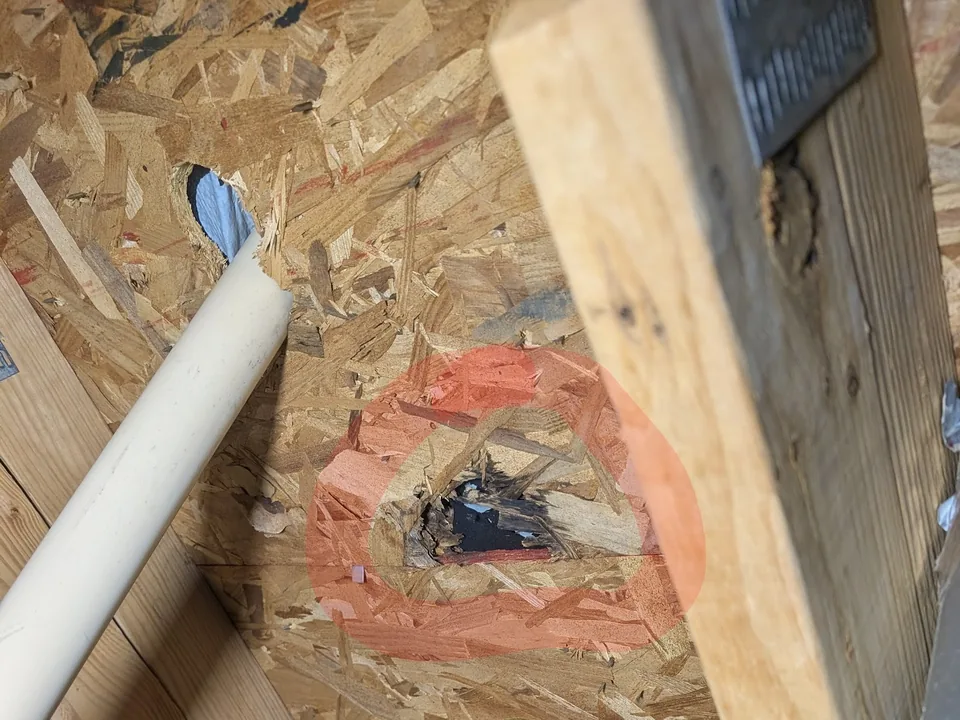
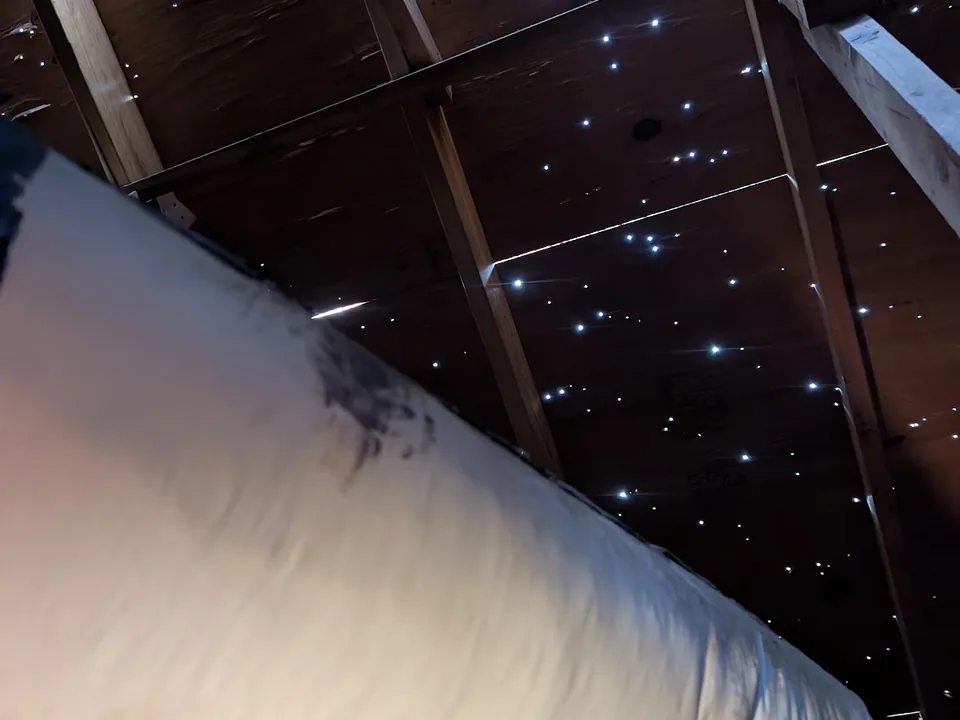
If you have attic access, go in with a flashlight while the roof is still wet. Look for darkened wood, a wet nail, daylight through a gap, or a drip trail on a rafter. Follow it uphill to the highest wet point. Mark the spot and measure from a wall or the ridge so a roofer can find it from above. If the attic has no floor, stay on the joists and do not step on the drywall between them.
Not every ceiling stain is the roof
Rule out the other sources before blaming the shingles. An air conditioner drain pan in the attic, a bathroom vent pipe that sweats, a second floor plumbing line, or a window above the stain can all put water on a ceiling. A stain that appears in dry weather usually is not the roof.
Your Policy
Tarp rules: temporary repairs and your duty to protect the property
The Texas FAIR Plan form requires reasonable repairs to stop more damage and pays their reasonable cost; keep receipts.
What the policy language says
The duty is written into the policy. The Texas FAIR Plan homeowners policy, a form approved by the Texas Department of Insurance, lists among your duties after a loss to protect the property from further damage, make reasonable and necessary repairs to protect the property, and keep an accurate record of repair expenses. Its Reasonable Repairs provision pays the reasonable cost you incur for necessary repairs made solely to protect covered property from further damage. Your own policy is the one that governs you, and its duties after loss section is where to look for the same words.
What the state tells homeowners
The agencies say the same thing in plain words. TDI’s home insurance guide says to make only temporary repairs to protect your house and belongings, such as putting a tarp over a damaged roof, and not to make permanent repairs, because the company might deny the claim if it has not seen the damage. The Office of Public Insurance Counsel says to only make emergency repairs before the company’s inspection. TWIA tells its coastal policyholders that reasonable costs for temporary repairs are covered when the loss is covered, and to keep the invoices. TDI’s hail claim tips add: cover holes to keep out rain, your policy may pay for temporary repairs, save all receipts, and file the claim quickly.
How a tarp should go on
A tarp that makes new holes is a second problem. GAF’s bulletin on replacing storm damaged shingles notes that shingles nailed through by a tarp must be replaced, since caulking the holes is not a permanent repair. We run the tarp over the ridge so the top edge is not an open seam, secure it with battens at the edges and the fewest fasteners possible, and photograph the roof before the tarp goes on. A tarp is a few weeks of protection, not a roof.
Timing
When to call a roofing expert for a roof leak, and when a repair waits for the adjuster
Stop the water now, document it, and hold the permanent repair until the leak and the cause are understood.
Call now when
Water is actively coming in, a ceiling is sagging, the leak is near wiring or a light fixture, or you cannot find the source. An emergency visit stops the water and records what we found; it is priced on its own and does not commit you to anything else. Separately, near Round Rock, the roof inspection is free when you call or text 512-575-5052.
Repair now, or wait
The cause decides it. A cracked pipe boot or a lifted piece of step flashing is a maintenance repair, and there is no reason to wait. A leak that followed a hail or wind storm is a possible claim, and the permanent repair waits until the damage has been seen and recorded, by you, by us, or by the adjuster. Temporary protection does not wait for anyone.
A policy detail about rain
Some Texas policies cover rain damage inside only when wind or hail made the opening. The Texas FAIR Plan form, for example, excludes loss caused by rain unless the direct force of wind or hail makes an opening in the roof or wall and the rain enters through it. That is one reason the record has to show the opening, not only the stain. Read your own policy and ask your agent what yours says. We advise and educate you on your options and rights, document the roof, and submit documented supplements. We are not a public adjuster and never negotiate or settle a claim for you. We never waive, absorb or discount a deductible.
The Record
Photograph before cleanup, and stay off a wet roof
Dated photos of the ceiling, attic and roof, taken before anything is moved or dried, plus every receipt.
What to photograph, in order
Take the photos before you clean. The ceiling stain with something for scale, the water on the floor, the attic wet spot and the drip trail, the roof from the ground with the suspect area in frame, and any shingle pieces in the yard. Then the tarp going on, and the receipts for the tarp, the fans and anything else you bought. TDI’s claim guidance is to take photos and videos of all damage, do what you need to keep it from getting worse, and keep receipts for all expenses.
Never climb on a wet roof
A wet asphalt roof is a slide, and a wet tile or metal roof is worse. Everything in this guide can be done from the ground, the attic, and a ladder that stays on the ground. Leave the roof to a crew with harnesses and dry shingles. Our storm damage guide covers what to document from the ground after hail or wind.
When You Are Ready
When you are ready
Emergency Leak Repair
Here is how we help. When the bucket is already under the drip, we trace the leak to its source, photograph it, stop the water, and write the repair scope before any work is agreed to.
Or call or text 512-575-5052.
Field Photos
On the job
Photos from roofs we have worked on. Select one to enlarge it.
Common Questions
Questions homeowners ask
Should I put a tarp on my roof myself?
Only if it can be done from a ladder on the ground, in dry weather, and the roof is low enough to reach safely. Most roofs are not. Call for a tarp and photograph the damage before it goes on. Your policy expects reasonable temporary repairs, not a fall.
Will my insurance pay for the tarp?
The Texas FAIR Plan policy form pays the reasonable cost of necessary repairs made solely to protect covered property from further damage, and TWIA tells its policyholders reasonable temporary repair costs are covered when the loss is covered. Check your own policy for the same provision and keep the receipt. Whether the underlying loss is covered is the carrier’s decision under your policy.
Can I repair the roof before the adjuster comes?
Temporary repairs, yes. TDI says not to make permanent repairs before the company sees the damage, because it might deny the claim. If the leak is not a storm claim at all, there is nothing to wait for.
How do I find a roof leak with no attic access?
Work from the stain uphill. Note which room, which wall, and what is on the roof directly uphill of that spot: a pipe, a vent, a chimney, a wall or a valley. Share that with the roofer before the visit so the inspection starts in the right place.
How long can a roof leak go before it causes mold?
The EPA says drying wet material within 24 to 48 hours usually prevents mold growth. That clock starts with each wetting, so a slow leak that keeps a spot damp is the one to worry about.
Does The Roof Shepherd handle the insurance claim for a leak?
No. We advise and educate you on your options and rights, document the roof, and submit documented supplements. We are not a public adjuster and never negotiate or settle a claim for you. We never waive, absorb or discount a deductible.
Keep Learning